
Isfahan
Varzaneh
White sands, white chadors, and the last bridge on the Zayandeh.
 8 highlights · tap a pin
Varzaneh is a small desert town roughly 105 km southeast of Isfahan, the last continuously inhabited settlement on the Zayandeh River before it dissolves into the Gavkhouni wetland. With habitation traced back some five millennia, it preserves a distinct living heritage: women wear white chadors rather than the black worn elsewhere in Iran, and many locals still speak a Pahlavi-Sasani dialect akin to that of Yazd's Zoroastrians. The town pairs a compact historic core of mudbrick mosque, Seljuk-era bridge, caravanserai and pigeon towers with one of central Iran's most accessible desert landscapes of pale, high sand dunes.
Next 5 days
Top places to see
- 1
Varzaneh Desert (sand dunes)
Pale, fine-sand dunes rising to roughly 50-60 m, among the most accessible deserts from Isfahan. Unusually bright/white sand compared with Iran's typical golden deserts; prime spot for sandboarding, camel rides, 4x4 safari, sunset photography and stargazing.
- Where
- East/southeast of town
- Time needed
- Half to full day (often an overnight)
- Opening hours
- Best at sunrise/sunset; go with a local guide or camp operator. Verify tour prices before travel.
- 2
Gavkhouni Wetland
Terminal salt marsh basin of the Zayandeh River and an internationally important wetland. Ramsar-listed (1975) wetland about 30 km from Varzaneh; a birdwatching site that forms a striking ecological contrast to the surrounding desert.
- Where
- Southeast of Varzaneh
- Time needed
- Half day
- Opening hours
- Water levels vary seasonally and the basin can be largely dry; check conditions and access with a guide before travel.
- 3
Jameh Mosque of Varzaneh
Historic Friday mosque, c. 1100 CE with Timurid-era rebuilding, said to sit on a former fire-temple site. Square courtyard plan with pool, two iwans and two prayer halls; a key example of the town's layered religious history.
- Where
- Old town
- Time needed
- 30-45 minutes
- Opening hours
- Entry generally free; observe prayer times and dress modestly. Verify access before travel.
- 4
Varzaneh Old Bridge (Pol-e Varzaneh)
Roughly 900-year-old brick arch bridge, the last historic bridge on the Zayandeh River. Attributed to the Seljuk era; about 67 m long with multiple arches, it marks the river's final inhabited crossing before the wetland.
- Where
- On the Zayandeh, edge of town
- Time needed
- 20-30 minutes
- Opening hours
- Open-air; the riverbed is often dry. Verify before travel.
- 5
Ghoortan (Qurtan) Citadel
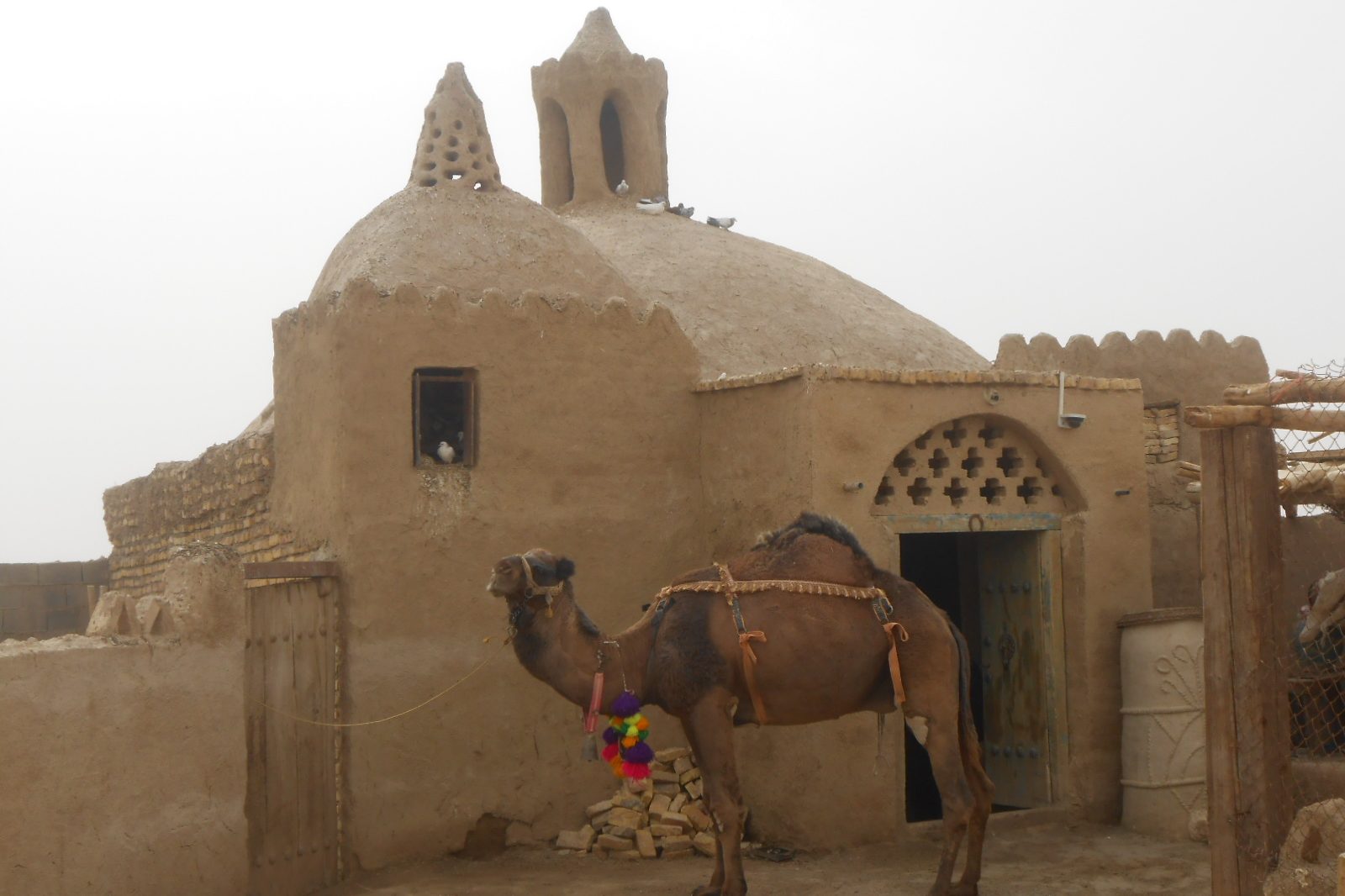
About 1,000-year-old mudbrick walled village/fortress on the Zayandeh, ~12 km west of Varzaneh. A rare surviving inhabited adobe citadel with thick (3-4 m) walls up to ~9 m high, covering tens of thousands of square meters; includes a pigeon tower.
- Where
- Ghoortan village, west of Varzaneh
- Time needed
- 1-1.5 hours
- Opening hours
- Combine with the drive in from Isfahan; verify opening and any entry fee before travel.
- 6
Pigeon Towers (Dovecotes) of Varzaneh
Cylindrical mudbrick towers built to house pigeons and collect droppings for fertilizer. Some towers were designed for tens of thousands of nesting pairs; a distinctive feature of central Iran's agricultural heritage.
- Where
- Around the town and farmland
- Time needed
- 30 minutes
- Opening hours
- Some are on private/agricultural land; ask locally or visit with a guide. Verify before travel.
- 7
Khara Salt Lake (Varzaneh Salt Lake)
Large salt flat with surreal white crust, a popular photography stop near the desert. Seasonal salt-lake landscape offering reflective, mirror-like conditions when water is present; over ~15 km2.
- Where
- Southwest, between Varzaneh and Khara
- Time needed
- 1-2 hours
- Opening hours
- Best combined with a desert tour; appearance changes greatly with season/rain. Coordinates approximate, verify route with a guide.
- 8
Varzaneh Caravanserai
Safavid-era caravanserai, roughly 400 years old, linked to Shah Abbas I's reign. Remnant of the town's role on historic desert trade and pilgrimage routes.
- Where
- Old town
- Time needed
- 20-30 minutes
- Opening hours
- Verify access and any restoration/closure before travel.
- 9
Yusefi Traditional House / ethnology museum
Qajar-era courtyard house presenting local domestic life and customs. Window into Varzaneh's traditional architecture and the white-chador culture.
- Where
- Old town
- Time needed
- 30-45 minutes
- Opening hours
- Hours and entry fee vary; verify before travel.
- 10
Camel-mill and Ox-well Complexes
Revived traditional animal-powered grain mill and water-drawing systems. Living demonstrations of pre-industrial desert engineering and daily life.
- Where
- Old town
- Time needed
- 20-30 minutes each
- Opening hours
- Small entry fees reported; verify hours and prices before travel.
- 11
Varzaneh Desert
Iran's largest desert-recreation hub, an easy day-trip from Isfahan. Widest range of desert activities, closest to a marquee city (Isfahan).
- Time needed
- Half day to overnight
Where to stay in Varzaneh
From $5 a night, our service included