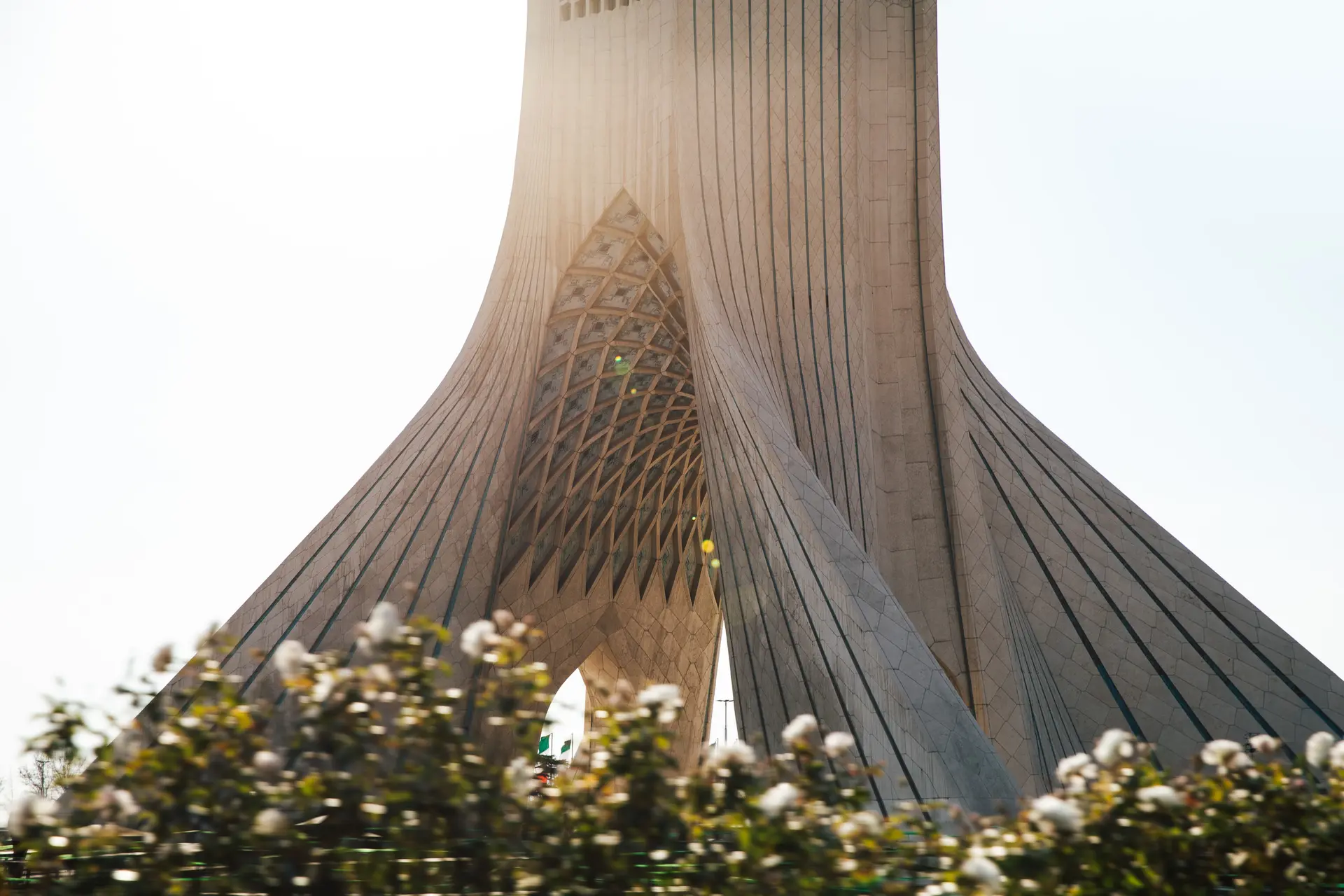

West Azerbaijan
Takht-e Soleyman
Throne of Solomon: a Sassanid fire-temple ringed around a bottomless crater lake
 8 highlights · tap a pin
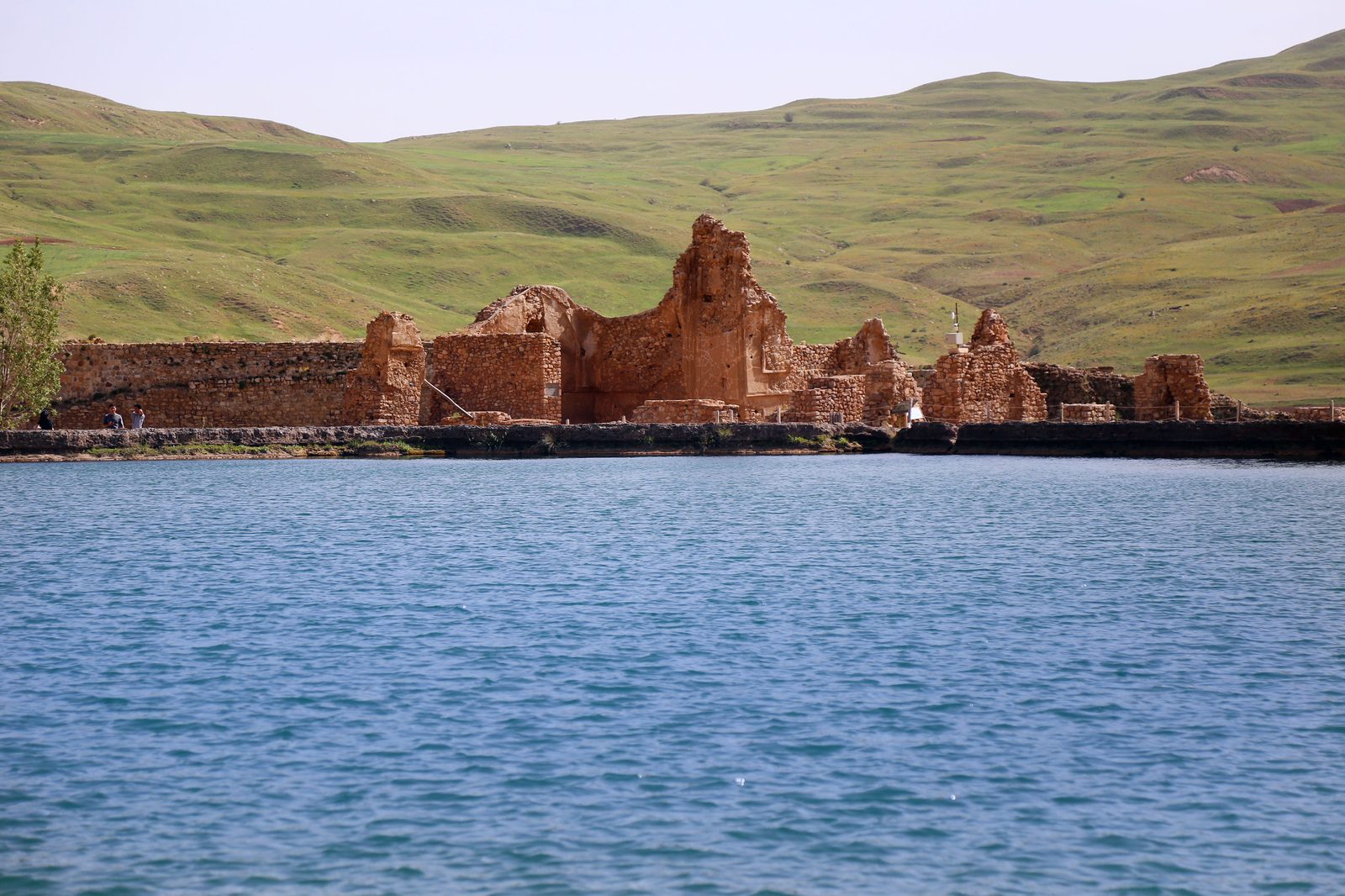
Takht-e Soleyman ("Throne of Solomon") is a fortified Sassanid sanctuary in a remote volcanic valley of West Azerbaijan, built around an artesian crater lake whose calcium-rich waters raised the whole platform some 60 m above the plain. It was the holiest site of state Zoroastrianism, home to Adur Gushnasp (Azar Goshnasp), one of the three Great Royal Fires reserved for warriors and kings, and was later rebuilt as an Ilkhanid (Mongol) summer palace in the 13th century. The site's fire temple, water shrine to the goddess Anahita, and oval fortifications strongly influenced later Islamic architecture, earning UNESCO World Heritage inscription in 2003. Its layered legends — Solomon's throne, a prison of monsters, the cradle of the True Cross relic under Khosrow II — make it one of Iran's most atmospheric archaeological landscapes.
Next 5 days
Top places to see
- 1
The Crater Lake (artesian spring lake)
Mineral-blue artesian lake at the heart of the sanctuary, roughly 80 m across and over 60 m deep. The reason the whole site exists: a calcium-saturated spring that built its own raised travertine platform over millennia, lifting the temples ~60 m above the valley. Sacred to Anahita; pilgrims cast offerings into its depths. Holds a constant 21C year-round.
- Time needed
- 30-45 min
- 2
Adur Gushnasp Fire Temple (Azar Goshnasp)
Ruins of the Sassanid Zoroastrian fire temple beside the lake. Home of one of the three Great Royal Fires of the Sassanid empire, reserved for warriors and kings, and the holiest Zoroastrian shrine of its day. Its layout and architecture influenced later Islamic building.
- Time needed
- 30 min
- 3
Zendan-e Soleyman (Prison of Solomon)
Hollow volcanic cone ~3 km west, rising ~100 m with a deep crater at its summit. An ancient extinct spring-cone with a ~100 m-deep crater and first-millennium-BC shrine remains at the top. Folklore says Solomon imprisoned monsters inside it. A 15-30 min uphill walk rewards with views over the whole valley.
- Time needed
- 1-1.5 hr
- 4
Temple of Anahita
Sassanid sanctuary dedicated to Anahita, goddess of the waters. Reflects the dual cult of fire and water at the heart of the complex; Anahita guarded the sacred lake. Part of the royal Sassanid sanctuary precinct.
- Time needed
- 20 min
- 5
Ilkhanid Summer Palace & Western Iwan (Iwan-e Khosrow)
13th-century Mongol palace built over the Sassanid ruins, with a grand western iwan. Abaqa Khan's summer and hunting residence (begun c. 1271) overlaid on the sacred site; famed for muqarnas vaults and exquisite lusterware and lajvardina tiles that fused Persian and Chinese motifs.
- Time needed
- 30-45 min
- 6
Oval Fortification Wall & Towers
Massive stone perimeter wall, roughly 1,120 m long with 38 towers/bastions and gates. The defensive ring that enclosed the entire sanctuary on its raised platform; its scale and gateways set the template for the fortified complex and frame the approach to the lake.
- Time needed
- 30 min walk
- 7
Tepe Majid (Tappeh Majid)
Nearby archaeological mound associated with the Zendan-e Soleyman cult area. Part of the broader inscribed cultural landscape, with prehistoric/early-historic occupation layers linked to the ancient sacred geography around Takht-e Soleyman.
- Time needed
- 15-20 min
- 8
On-site Museum
Small site museum displaying excavated tiles, ceramics and finds. Context for the Sassanid and Ilkhanid finds — luster tiles, pottery and architectural fragments recovered from the complex.
- Time needed
- 20-30 min
- Opening hours
- Hours and whether the museum is open vary; verify before travel.
- 9
Belqeis Mountain & Castle (near Takab)
Prominent peak near Takab with the ruins of historic Belqeis (Bilqis) Castle. A scenic mountain and fortress site adding a half-day excursion to a Takab base; ties into the region's layered history beyond the World Heritage core.
- Time needed
- half day