
Khuzestan
Shushtar
The island city where Persians and Romans engineered water into a masterpiece.
 8 highlights · tap a pin
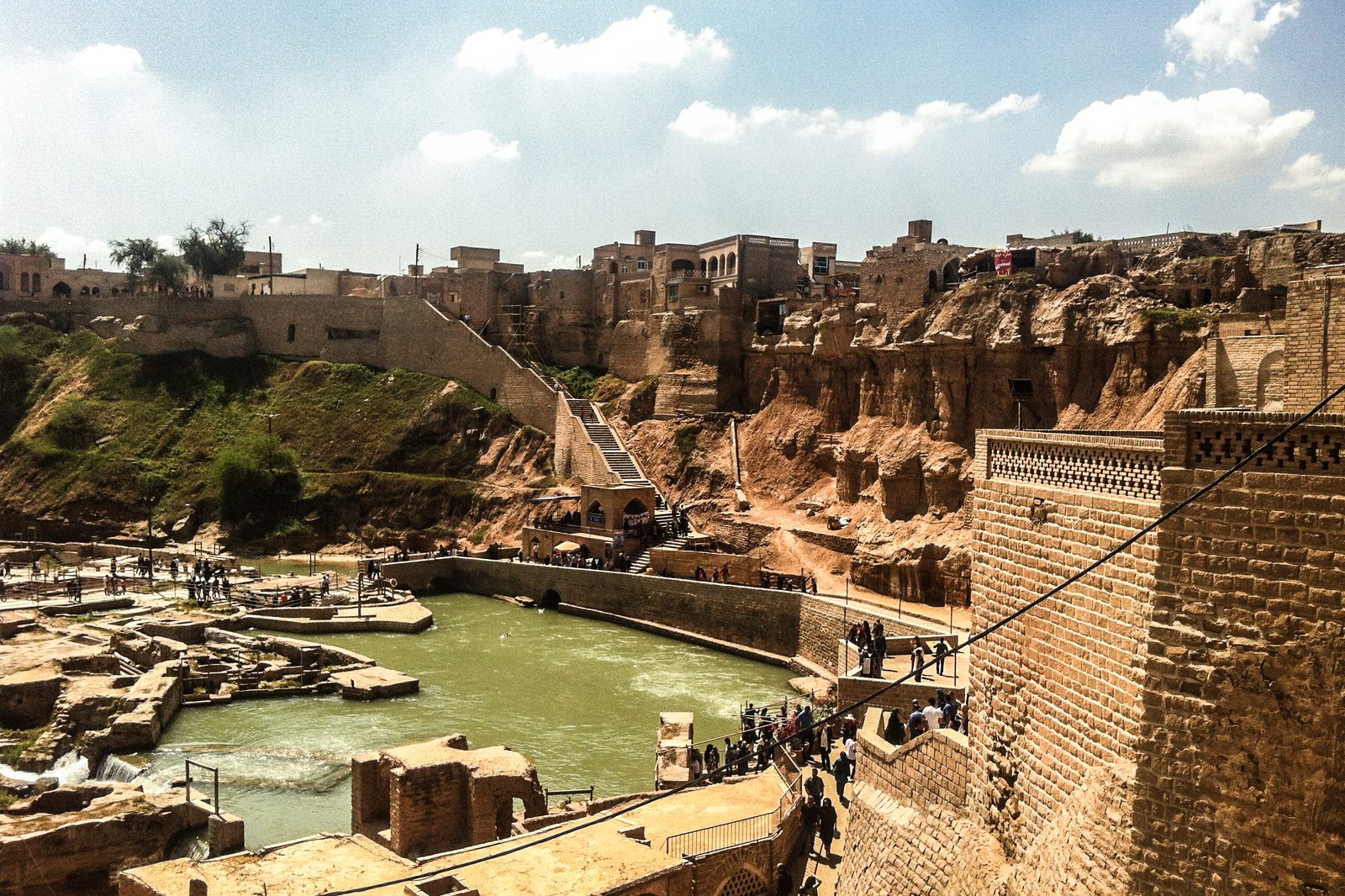
Shushtar is an ancient island city in northern Khuzestan, built on a man-made island carved out by two diversion canals off the Karun River. Its crowning glory is the Shushtar Historical Hydraulic System, a UNESCO World Heritage site (2009) and self-described "masterpiece of creative genius" that fuses Achaemenid origins, Sasanian engineering and captive Roman labor into a single working complex of dams, bridges, tunnels, watermills and dramatic man-made waterfalls. Traced in concept to Darius the Great and developed under the Sasanians (notably Shapur I), the system once powered mills, irrigated a vast plain, supplied the city and served as a defensive moat. Today its cascading waterfalls, Gargar canal, Salasel Castle and Qajar-era courtyard houses make Shushtar one of Iran's most rewarding heritage-engineering destinations.
Next 5 days
Top places to see
- 1
Shushtar Historical Hydraulic System (Watermills & Waterfalls)
UNESCO 2009UNESCO-listed complex of tunnels, watermills and dramatic man-made waterfalls where the Gargar canal cascades over ruined mills. The heart of the World Heritage site (inscribed 2009); three main tunnels channel water through a cliff of mills, dropping into basins to form scenic cascades that UNESCO calls a 'masterpiece of creative genius'.
- Where
- Southern Shushtar, Gargar gorge
- Time needed
- 2-3 hours
- Opening hours
- Ticketed site; hours and prices vary seasonally - verify before travel.
- 2
Band-e Kaisar / Pol-e Shadorvan (Caesar's Dam-Bridge)
Sasanian-era weir-bridge across the Karun, built with captured Roman labor in the 3rd century AD. Roughly 500 m long, it was the easternmost Roman-style dam-bridge and the first structure in Iran to combine a bridge with a dam, marking the entrance to the Gargar canal system.
- Where
- Karun riverfront
- 3
Salasel Castle (Selasal Castle)
Hilltop fortress and former administrative heart of the hydraulic system, overlooking the waterfalls. Dating in origin to the Achaemenid era and seat of the governor of Khuzestan, the entire Shushtar hydraulic system was controlled from here; it offers panoramic views over the watermills.
- Where
- Above the watermills complex
- 4
Band-e Mizan (Mizan Dam)
Sasanian distribution dam (~500+ m long) that splits the Karun into the Gargar and Shoteit (Shatit) branches. Attributed to Shapur I, the 'Adjustment Dam' is the key regulator of the whole system, balancing water between the city's two great canals.
- Where
- Upstream on the Karun
- 5
Gargar Canal & Gargar Bridge-Dam (Pol-e Band-e Gargar)
Man-made canal (still in use) and its bridge-dam that feed the watermills and the city. One of the two main diversion canals; the Gargar still supplies Shushtar via tunnels and powers the waterfalls. The bridge-dam is about 83 m long.
- Where
- Gargar gorge
- 6
Imamzadeh Abdullah
Shrine and tomb on a rise south of the city, ringed by an old cemetery. Topped by a distinctive conical Khuzestani 'urchin' dome similar to the tomb of Daniel in Shush; its stone portal dates to the Safavid era.
- Where
- Southern Shushtar
- 7
Mostofi (Mostowfi) Historical House
Late-Qajar courtyard mansion of merchant Mohammad Ali Mostofi, now the Anthropology Museum. Showcases traditional Shushtari domestic architecture with views over the Shadorvan river; houses a museum, handicrafts shop and restaurant with live music.
- Where
- Historic core
- Opening hours
- Operates as museum/restaurant; hours vary - verify before travel.
- 8
Lashkar Bridge-Dam (Pol-e Lashkar)
Historic bridge-dam, one of the 13 listed components of the hydraulic system. Part of the network of dams and bridges that integrated transport, irrigation and water control across the Karun branches.
- Where
- On the Gargar branch
- 9
Kolah-Farangi Tower
Octagonal pavilion-tower that is one of the 13 components of the UNESCO system. A landmark structure within the hydraulic ensemble, historically associated with monitoring and managing the waterworks.
- Where
- Within the hydraulic system
- 10
Historic Bazaar & Qajar Old Town
Atmospheric old quarter with traditional houses, narrow lanes and a covered bazaar. Preserves Shushtar's living heritage of brick courtyard mansions and crafts, a counterpoint to the engineering sites.
- Where
- City center
Where to stay in Shushtar
From $7 a night, our service included