
Kerman
Rayen
The adobe citadel Bam's earthquake never claimed.
 6 highlights · tap a pin
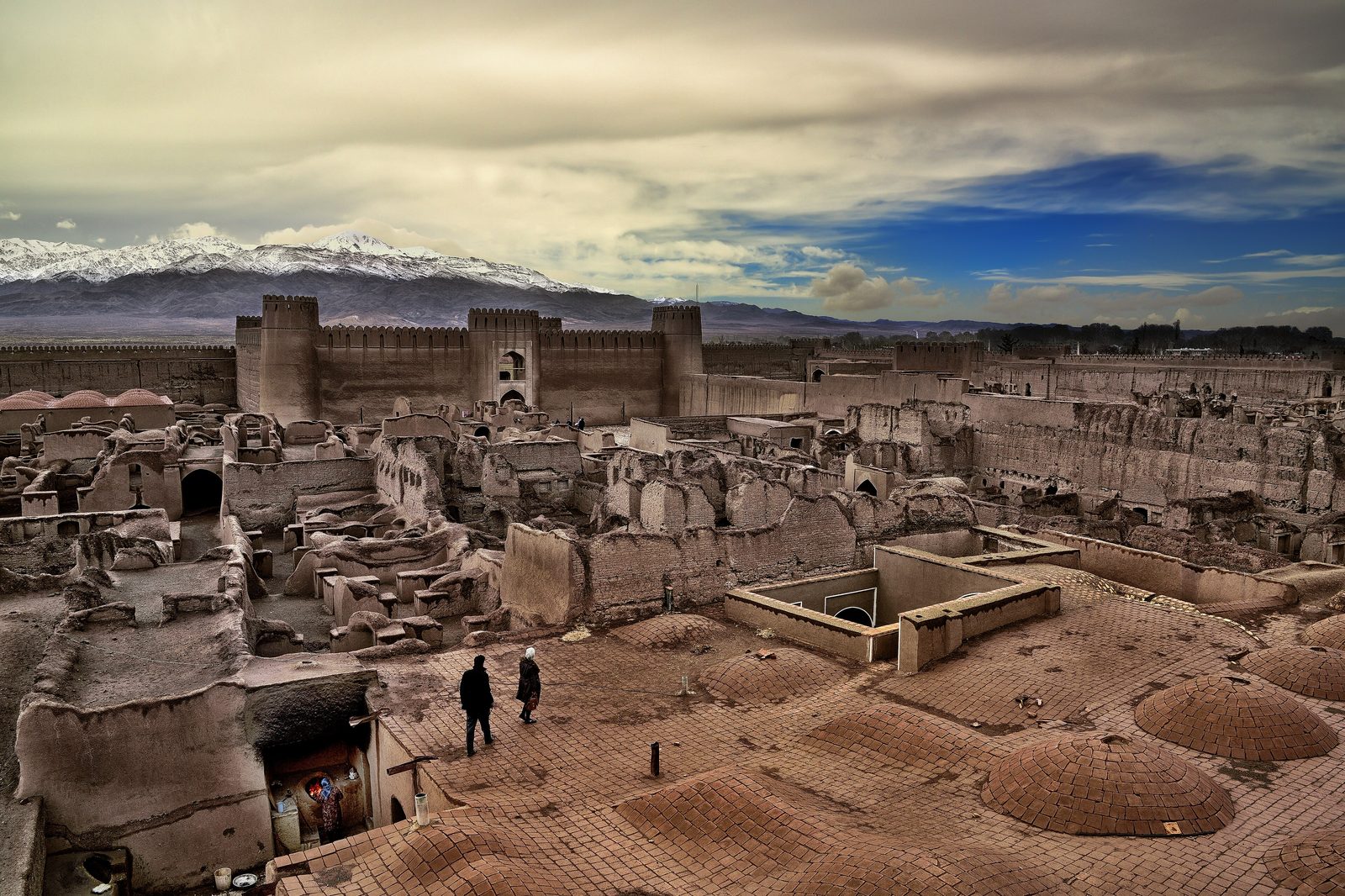
Rayen is a small highland town about 100 km south of Kerman, sitting at roughly 2,200 m at the foot of Mount Hezar, southern Iran's highest peak. It is defined by Arg-e Rayen (Rayen Castle), a vast mud-brick citadel spanning over 22,000 square meters that is widely cited as the second-largest adobe fortress in the world after Arg-e Bam. Believed to rest on Sasanian-era foundations and inhabited until 1868, the citadel survived the 2003 earthquake that devastated Bam, leaving it one of the best-preserved examples of traditional Iranian military and urban architecture. The surrounding region adds desert-edge waterfalls, mineral springs, walnut orchards and a living tradition of knife-making.
Next 5 days
Top places to see
- 1
Arg-e Rayen (Rayen Castle)
Vast well-preserved medieval mud-brick citadel of over 22,000 m2, second-largest adobe fortress after Bam. One of the world's largest and best-preserved adobe citadels; survived the quake that destroyed Bam, preserving a near-complete picture of traditional Iranian fortress-town design.
- Where
- Rayen town center
- Time needed
- 1.5-2.5 hours
- Opening hours
- Daytime visiting with an entrance fee; exact hours and ticket price change seasonally — verify before travel.
- 2
Governor's Quarter (Khan-Neshin / inner castle)
Fortified inner castle with watchtowers that housed the governor and administration. Shows classic Persian four-iwan layout around a central courtyard — the elite, defensible core of the citadel.
- Where
- Inside Arg-e Rayen
- Time needed
- 20-30 minutes
- Opening hours
- Accessed within the main citadel ticket; verify before travel.
- 3
Zoorkhaneh & former fire temple
Small domed structure that was a Zoroastrian fire temple, later converted to a traditional Persian gymnasium. Tangible record of the citadel's pre-Islamic-to-Islamic transition and of varzesh-e bastani heritage.
- Where
- Inside Arg-e Rayen
- Time needed
- 10-15 minutes
- Opening hours
- Within the citadel grounds; verify before travel.
- 4
Commoners' & artisans' quarters (Aameh-Neshin / A'yan-Neshin)
Residential and craft districts laid out by social class, with stables, mosque and workshops. Illustrates how a self-contained fortified town separated merchants, farmers, craftsmen, clergy and notables.
- Where
- Inside Arg-e Rayen
- Time needed
- 20-30 minutes
- Opening hours
- Within the citadel grounds; verify before travel.
- 5
Rayen Waterfall (Zar Roud)
Waterfall on the Zar Roud River about 14 km southwest of town in the Mount Hezar foothills. Snow-fed cascade and river in an otherwise desert-edge region; popular green retreat in spring and summer.
- Where
- Hezar foothills, SW of Rayen
- Time needed
- Half day with the drive/walk
- Opening hours
- Outdoor natural site; best flow after snowmelt — verify road and water conditions before travel.
- 6
Mount Hezar foothill villages
Cool green villages at the base of Mount Hezar (4,501 m), southern Iran's highest peak. Mild summer climate, orchards and mineral springs make Rayen a 'desert paradise'; gateway to highland trekking.
- Where
- South/southwest of Rayen
- Time needed
- Half to full day
- Opening hours
- Mountain area; conditions and access vary by season — verify before travel.