
Yazd
Kharanaq
A crumbling mud-brick ghost town crowned by a minaret that trembles at a touch
 8 highlights · tap a pin
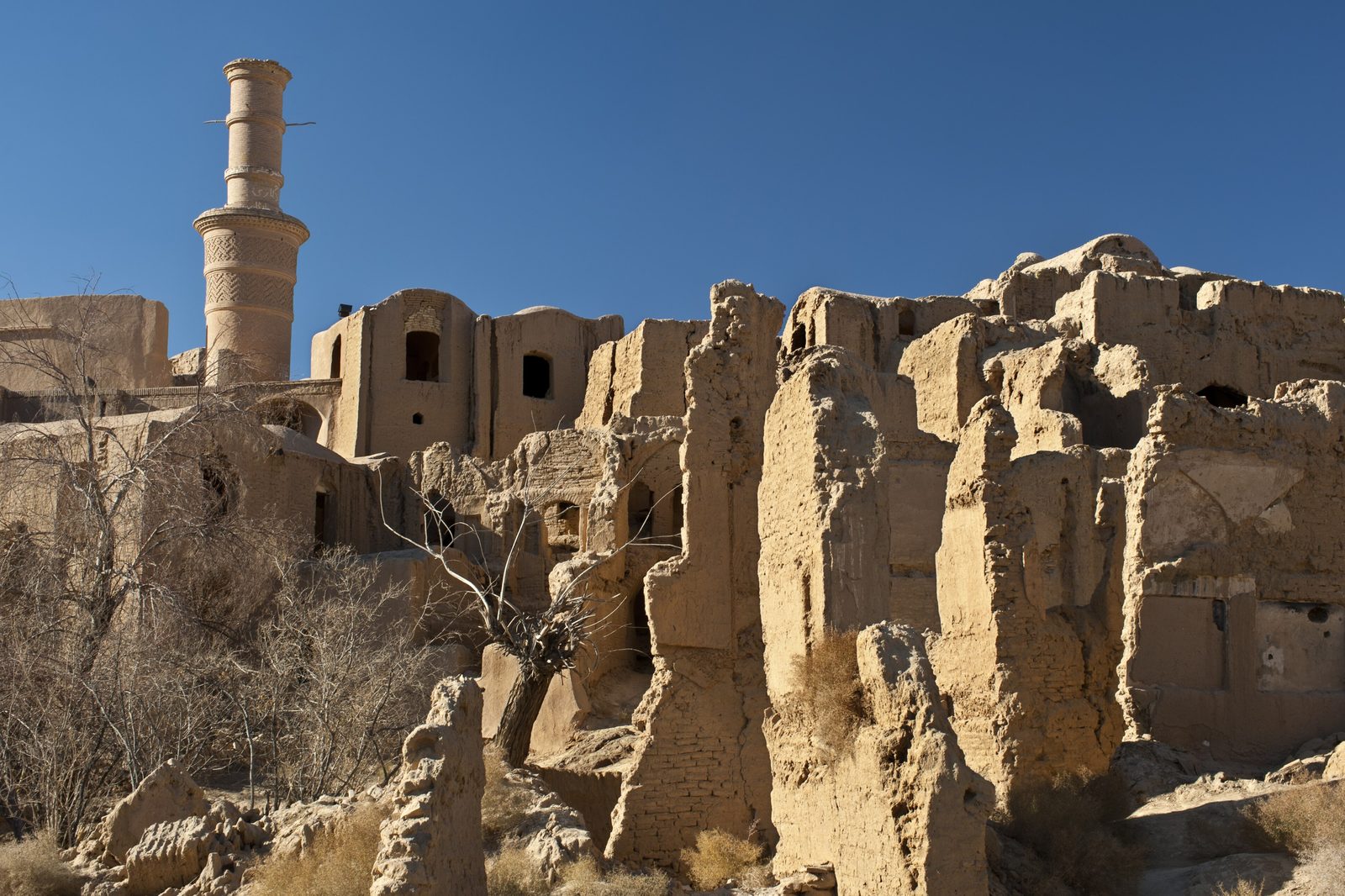
Kharanaq is a near-deserted adobe village set in a remote valley about 70 km north of Yazd, in Ardakan County, where settlement stretches back roughly 4,000 to 4,500 years. Its labyrinthine Old Town of stacked sun-dried mud-brick houses, tunnels and passageways was continuously inhabited until a few decades ago, when dwindling water forced residents into an adjacent New Town. The site's signature draw is its Shaking Minaret, an all-clay tower that visibly vibrates when nudged, alongside a restored caravanserai, a small mosque and a long aqueduct bridge. Today it stands as one of Iran's largest and most atmospheric collections of earthen architecture.
Next 5 days
Top places to see
- 1
Shaking Minaret (Oscillating Minaret of Kharanaq)
A 15 m all-clay minaret with three floors and a spiral interior stair that visibly trembles when nudged. Reputedly the only minaret in the world built entirely of clay that shakes; one of Iran's handful of 'moving minarets,' with the cause of its oscillation still debated.
- Where
- Old Town, beside the Jameh/Qajar mosque
- Time needed
- 20-30 min
- Opening hours
- Climbing access and shaking demonstrations vary; verify before travel
- 2
Old Town (abandoned adobe quarter)
A maze of stacked mud-brick houses, tunnels, covered passageways and collapsing rooms spread over a hillside. One of the largest and most photogenic collections of crumbling earthen architecture in Iran, continuously inhabited until roughly 40 years ago.
- Where
- Old Kharanaq
- Time needed
- 1-2 hours
- Opening hours
- Some structures are unstable; tread carefully and verify safe areas before travel
- 3
Kharanaq Caravanserai
A restored caravanserai near the village entrance that once sheltered merchants and pilgrims. Historic Silk-route waystation, rebuilt in the Qajar era and now restored; partly used for hospitality/lodging.
- Where
- Village entrance
- Time needed
- 30 min
- Opening hours
- Lodging/cafe operation status varies; verify before travel
- 4
Jameh Mosque of Kharanaq (Qajar mosque / hoseyniyeh)
A small restored mud-brick mosque with a shabestan prayer hall, standing at the foot of the shaking minaret. The functioning religious heart of the old village and the structure the famous minaret is attached to.
- Where
- Old Town
- Time needed
- 15-20 min
- Opening hours
- Modest dress required; verify access before travel
- 5
Aqueduct Bridge
A long (~40 m) historic bridge built to carry water for irrigation across the valley. A striking piece of desert hydraulic engineering tied to the qanat system that once sustained the village.
- Where
- Edge of Old Town
- Time needed
- 10-15 min
- 6
Kharanaq Castle / fortress
A fortified complex of multi-storey adobe houses said to date to the Sasanian era. Among the oldest fabric in the village (reputedly ~1,800 years old); recently the subject of restoration work.
- Where
- Old Town core
- Time needed
- 30-45 min
- Opening hours
- Restoration ongoing in parts; verify open areas before travel
- 7
Qajar bathhouse (hammam) with qanat system
An old public bath featuring the village's qanat-fed water plumbing. Illustrates how the settlement harnessed underground water in a waterless landscape.
- Where
- Old Town
- Time needed
- 15 min
- 8
Old water mills
Two historic mills, reported to be over a century old, powered by the village's water channels. Rare surviving examples of qanat-powered milling in the central desert.
- Where
- Near the watercourse
- Time needed
- 10-15 min