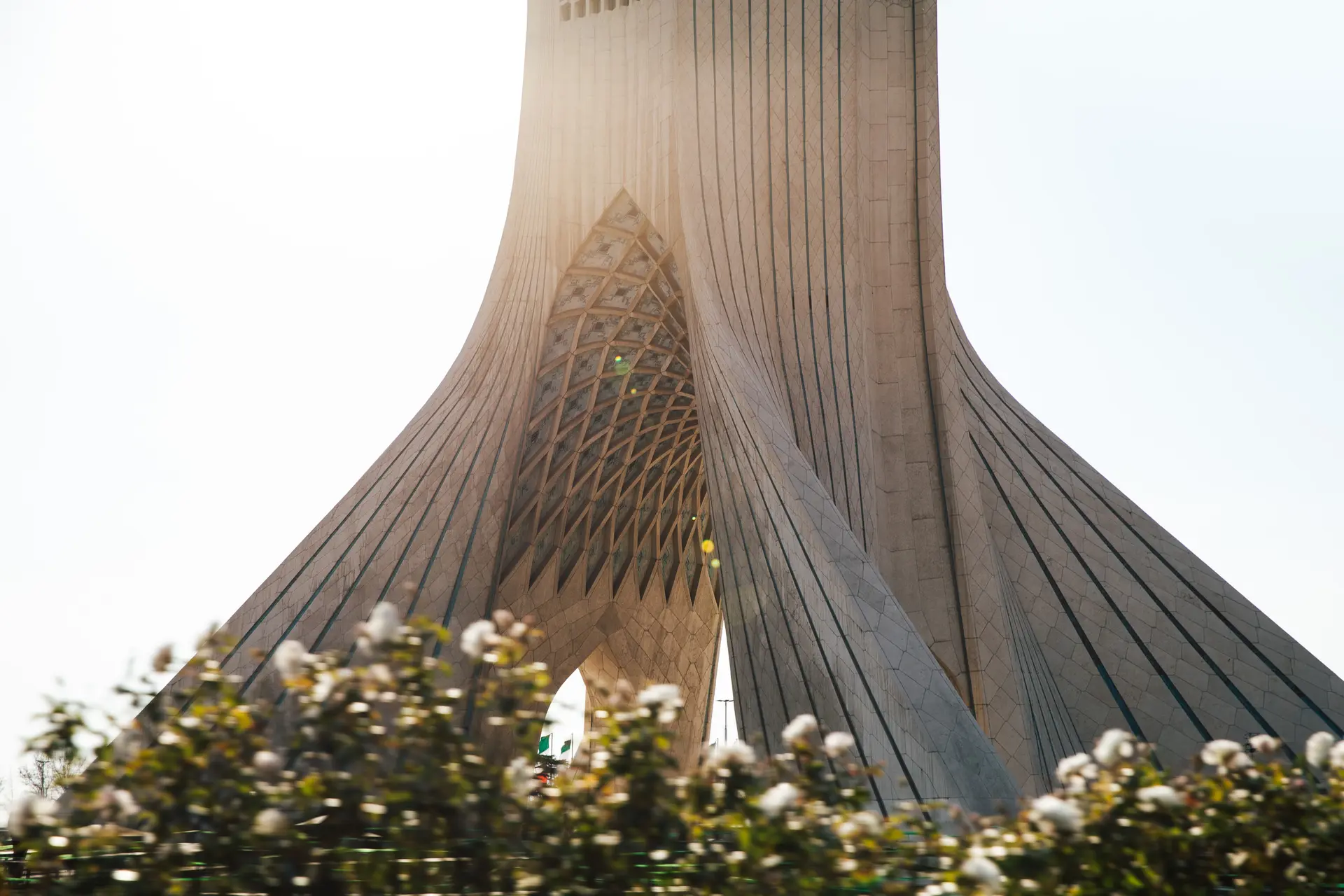

Kerman
Kerman
High-desert capital of Safavid splendor and the doorstep to the Lut
 8 highlights · tap a pin
Kerman is the historic capital of southeastern Iran's largest province, sprawled across a 1,755 m high plateau between mountains and desert. Founded as a Sasanian outpost (Veh-Ardashir) in the 3rd century AD, it flourished as a Silk Road trade emporium that Marco Polo passed through in 1271, and reached its architectural zenith under the Safavids, when governor Ganjali Khan endowed a magnificent square, bazaar, and bathhouse. Today it pairs a deep heritage core of mosques, caravanserais, and covered bazaars with the role of gateway to the Lut Desert, one of the hottest places on Earth, and the Persian gardens and citadels of the surrounding province.
Next 5 days
Top places to see
- 1
Ganjali Khan Complex
Safavid-era ensemble of square, bazaar, bathhouse-museum, mosque, school and water reservoir in the city's historic heart. Kerman's signature monument, an ~11,000 sq m complex endowed by governor Ganjali Khan under Shah Abbas I; the bathhouse (completed 1609) now houses a museum with wax figures and Safavid artifacts beneath stucco, frescoes and stained glass.
- Where
- Old Bazaar / historic core
- Time needed
- 2-3 hours
- Opening hours
- Bathhouse museum and chambers ticketed; hours and prices vary seasonally - verify before travel.
- 2
Kerman Grand Bazaar (Vakil / National Bazaar)
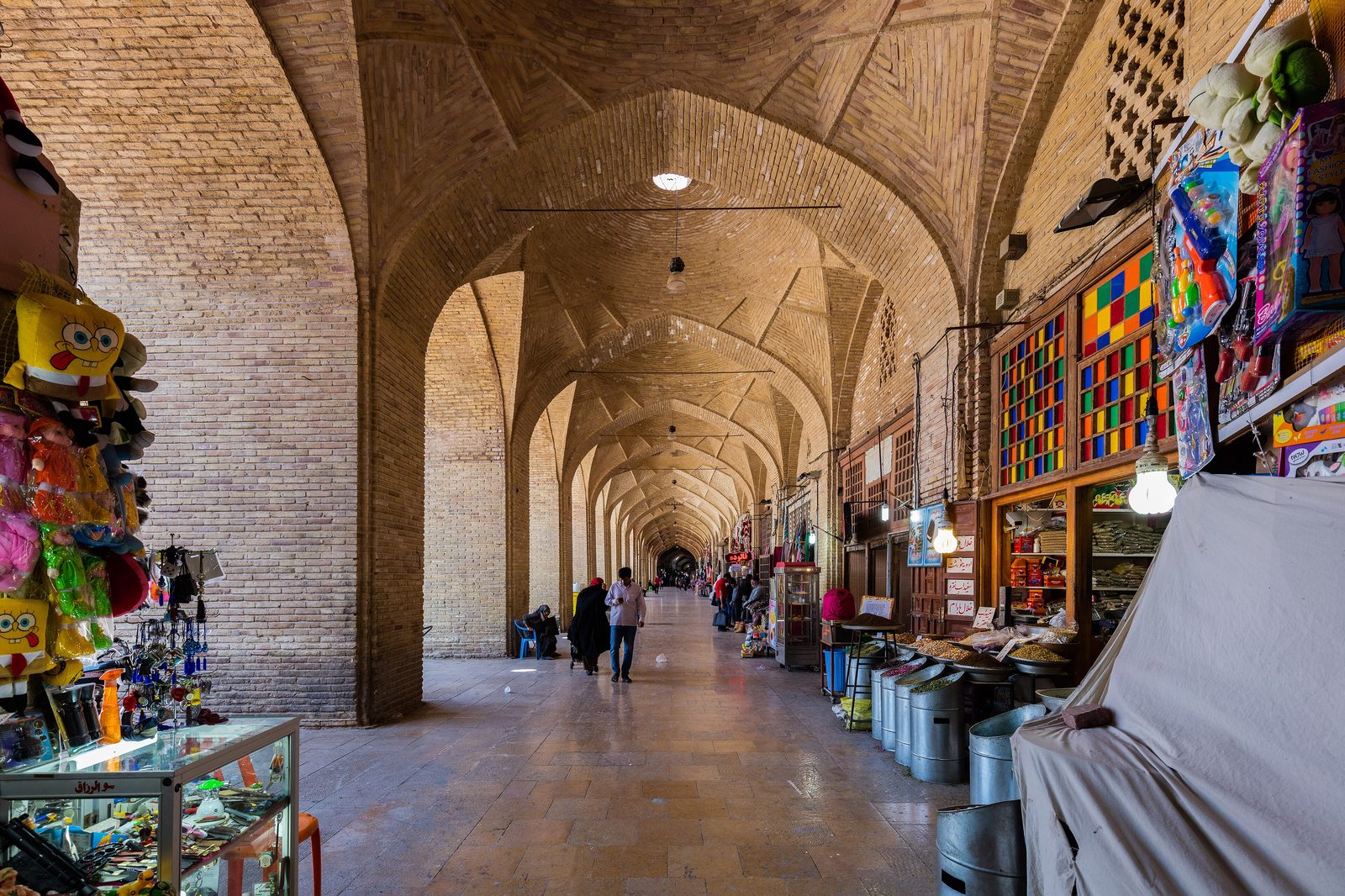
One of Iran's oldest and longest covered bazaars, running across the old city and linking the Arg gate to the Vakil/Mozaffari area. Often cited as among the oldest bazaars in Iran (after Tabriz); a roughly multi-kilometer spine of caravanserais, gheisariehs, and craft rows incorporating the Ganjali Khan and Vakil complexes - prime spot for Kerman carpets, pateh embroidery, spices and sweets.
- Where
- Old city
- Time needed
- 2-4 hours
- Opening hours
- Closed Fridays and during midday prayer breaks; teahouses inside keep their own hours - verify before travel.
- 3
Vakil Teahouse (Vakil Bathhouse)
Historic Qajar-era bathhouse within the Vakil complex, now a beloved traditional teahouse and restaurant, often with live santur music. A converted hammam where visitors dine beneath vaulted, tiled ceilings - one of Kerman's most atmospheric eateries and a city institution for tea, dizi and local sweets.
- Where
- Old Bazaar
- Time needed
- 1-2 hours
- Opening hours
- Operates as a restaurant/teahouse; hours and live-music nights vary - verify before travel.
- 4
Jameh Mosque of Kerman (Mozaffari Mosque)
14th-century four-iwan congregational mosque near Shohada Square, celebrated for blue tilework and a tiled mosaic mihrab. Dating to the Muzaffarid era, its tall tiled eastern portal and mosaic mihrab are among Kerman's finest examples of medieval Persian Islamic architecture.
- Where
- Shohada (Moshtaqiyeh) Square
- Time needed
- 30-60 minutes
- Opening hours
- Active mosque; modest dress required and entry may pause during prayers - verify before travel.
- 5
Shazdeh Garden (Bagh-e Shazdeh), Mahan
UNESCO 2011Qajar-era terraced Persian garden with cascading fountains set in the desert near Mahan, ~35 km from Kerman. One of the nine gardens collectively inscribed as 'The Persian Garden' on the UNESCO World Heritage List in 2011; a 5.5-hectare oasis of terraces, pools and pavilions fed by a gravity water system, dramatic against the arid backdrop.
- Where
- Mahan (province, near Kerman)
- Time needed
- 1.5-2 hours
- Opening hours
- Entry ticketed; combine with Mahan shrine on a half-day trip - verify hours/prices before travel.
- 6
Shah Nematollah Vali Shrine, Mahan
Turquoise-domed Sufi shrine and mausoleum of the 14th-15th century mystic-poet Shah Nematollah Vali in Mahan. Burial place of the influential Sufi poet (d. 1431); a serene complex of tiled domes, minarets, courtyards and ancient cypresses, frequently paired with Shazdeh Garden as a Mahan day trip.
- Where
- Mahan (province, ~37 km from Kerman)
- Time needed
- 1 hour
- Opening hours
- Active pilgrimage site; modest dress required - verify hours before travel.
- 7
Kalut / Kaluts of Shahdad (Lut Desert)
UNESCO 2016Vast field of wind-sculpted yardang ridges ('Kaluts') on the western edge of the UNESCO Lut Desert, reached via Shahdad. The Lut Desert was inscribed by UNESCO in 2016 and contains some of Earth's highest recorded surface temperatures; the towering Kalut formations create a surreal 'desert city' landscape that is Kerman's flagship natural draw, especially at sunset.
- Where
- Shahdad / Lut Desert (province)
- Time needed
- Half to full day
- Opening hours
- Requires a guide/4WD; go at dawn or dusk and avoid high summer heat - verify tour and water/safety arrangements before travel.
- 8
Rayen Castle (Arg-e Rayen)
Well-preserved medieval adobe citadel ~100 km south of Kerman, a smaller cousin of Arg-e Bam. A roughly 1,000-year-old mudbrick fortified town displaying the full architecture of a desert citadel - governor's quarters, walls, residences - inhabited until about 150 years ago and possibly built on Sasanian foundations.
- Where
- Rayen (province)
- Time needed
- 1.5-2 hours
- Opening hours
- Ticketed; often combined with Mahan or Bam on a long day trip - verify hours before travel.
- 9
Arg-e Bam (Bam Citadel)
UNESCO 2004The world's largest adobe structure, ~195 km from Kerman, rebuilt after the 2003 earthquake. Inscribed by UNESCO in 2004 as 'Bam and its Cultural Landscape'; an ancient Silk Road citadel with roots reaching back to the Achaemenid era, devastated by the 2003 quake and the focus of a major reconstruction effort.
- Where
- Bam (province)
- Time needed
- 2-3 hours
- Opening hours
- Full-day trip from Kerman; reconstruction is ongoing and some sections may be closed - verify access before travel.
- 10
Moayedi Ice House (Yakhdan-e Moayedi)
Conical adobe yakhchal (ancient ice-storage dome) in the city, a striking example of desert engineering. A surviving traditional Persian ice house that once stored winter ice for summer use, illustrating Kerman's ingenious adaptation to its arid climate; a quick, photogenic stop in town.
- Where
- Moayedi quarter (city)
- Time needed
- 20-30 minutes
- Opening hours
- Mostly viewed from outside; interior access varies - verify before travel.
- 11
Fath Abad Garden
Restored Qajar-era Persian garden with a reflecting pool and illuminated pavilion ~10-15 km northwest of the city center. A photogenic registered national-heritage garden and pavilion, especially atmospheric at night, offering a quieter alternative to Shazdeh near the city.
- Where
- Ekhtiarabad (city outskirts)
- Time needed
- 1 hour
- Opening hours
- Ticketed; cafe on site - verify hours/prices before travel.
Where to stay in Kerman
From $4 a night, our service included