
Kerman
Dasht-e Lut (Kaluts of Shahdad)
The hottest place on Earth, where wind-carved cities of sand meet the darkest desert skies.
 8 highlights · tap a pin
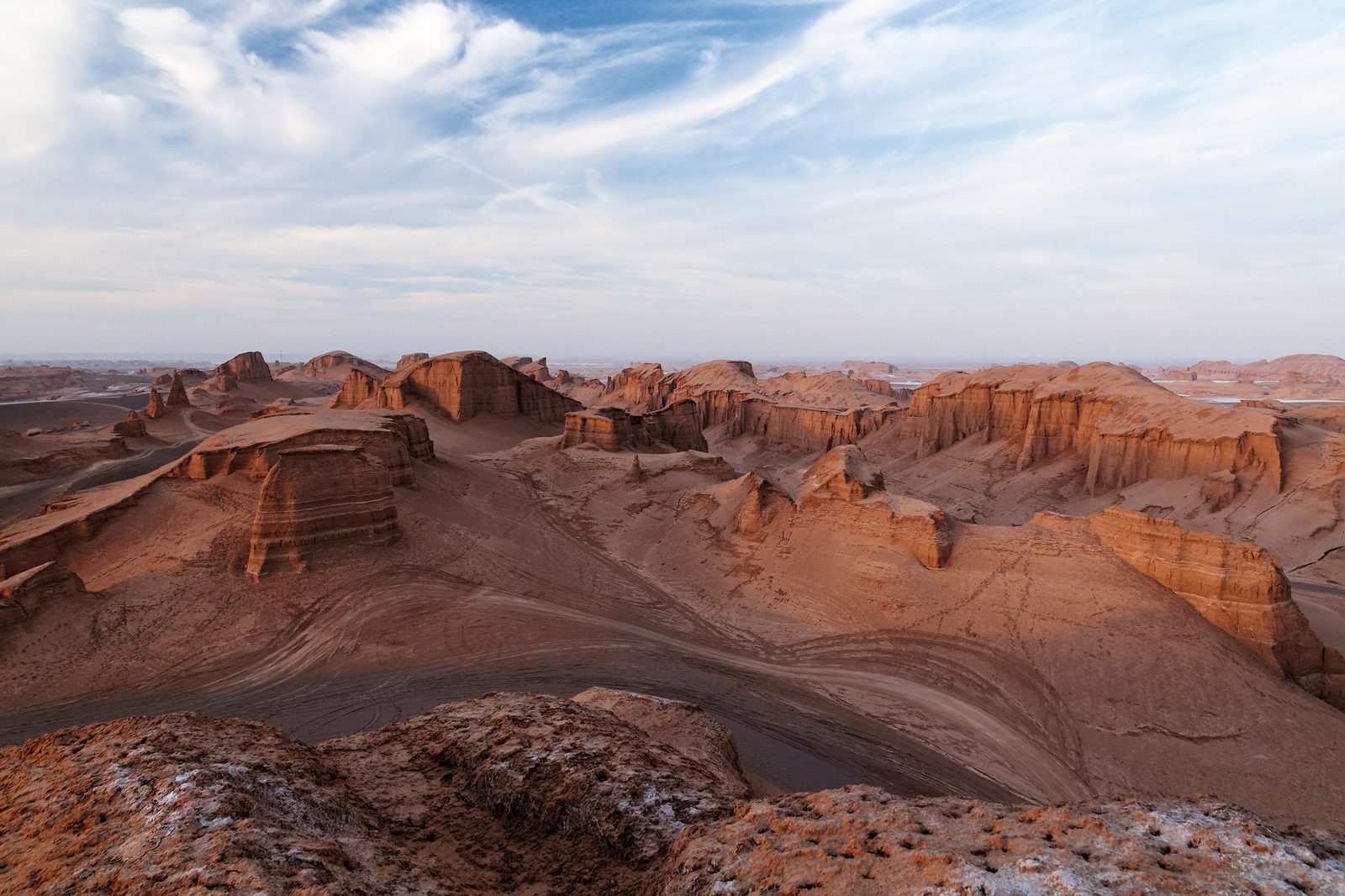
Dasht-e Lut is a vast Iranian desert in Kerman and Sistan-Baluchestan provinces, inscribed in 2016 as Iran's first natural UNESCO World Heritage Site for its exceptional yardang landforms and ongoing wind-erosion geology. Its signature spectacle is the Kaluts (kalut/yardang) near the gateway oasis town of Shahdad, a labyrinth of towering wind-sculpted ridges that resemble a ruined city, while satellites have repeatedly measured the world's highest recorded land-surface temperatures here. Beyond the geology, the Lut holds among the planet's darkest night skies for stargazing, towering sand seas, nebka mounds, salt rivers, and Bronze Age archaeology tied to the Shahdad culture and the broader Jiroft civilization. It is an astonishing destination of geological superlatives rather than a conventional city.
Next 5 days
Top places to see
- 1
Kaluts of Shahdad (Kalut yardang field)
Vast field of wind-carved sand-and-clay ridges resembling a ruined desert city, the heart of the Lut UNESCO site. One of the largest yardang landscapes on Earth; ridges run parallel to the prevailing wind, reaching up to about 75-155 m in height and traceable for tens of kilometers. The signature image of the Lut Desert.
- Where
- Lut Desert, NE of Shahdad
- Time needed
- Half to full day (sunset essential)
- Opening hours
- Open landscape, no formal gate; access via Shahdad-Nehbandan road roughly 40 km past Shahdad. Verify road and guide/4x4 requirements before travel.
- 2
Lut night sky / stargazing zone
Among the darkest skies in Iran, with the Milky Way and faint deep-sky objects visible to the naked eye. Near-zero light pollution makes the Lut a premier astrotourism site; desert camps walk guests beyond camp lights for Milky Way and meteor viewing.
- Where
- Open desert around the Kaluts
- Time needed
- Overnight
- Opening hours
- Best near new moon; bring warm layers as desert nights are cold. Verify camp availability before travel.
- 3
Nebka (Nabkha) mounds plain
Vase-shaped sand hummocks built up around desert vegetation, some reaching around 10 m tall. A distinctive Lut landform en route to the Kaluts; an early stage of dune formation that contrasts with the giant yardangs further in.
- Where
- Between Shahdad and the Kaluts
- Time needed
- 30-60 minutes
- Opening hours
- Roadside stop on the desert approach; verify access with a local guide.
- 4
Shafiabad Caravanserai
Historic mud-brick Qajar-era caravanserai in Shafiabad village, the last oasis before the deep desert. Atmospheric corner-towered desert waystation marking the historic edge of habitation before the Kaluts; a classic photo and rest stop.
- Where
- Shafiabad village, Shahdad District
- Time needed
- 30-45 minutes
- Opening hours
- Hours informal; verify before travel.
- 5
Rig-e Yalan sand sea
Enormous dune field in the southeastern Lut with some of the tallest dunes on Earth (up to roughly 300 m). A remote, expedition-grade sand sea showcasing the Lut's giant aeolian dunes; reachable only by serious off-road desert crossing.
- Where
- Southeastern Lut Desert
- Time needed
- Multi-day expedition
- Opening hours
- Deep wilderness; requires experienced guide, multiple 4x4s and full self-sufficiency. Verify logistics and safety before travel.
- 6
Gandom Beryan plateau
Dark basaltic 'Plain of Toasted Wheat' historically cited among the hottest spots in the Lut. A black volcanic lava plateau whose name reflects local lore of extreme heat; associated with the desert's record surface temperatures.
- Where
- Central-northern Lut Desert
- Time needed
- Part of a multi-day desert tour
- Opening hours
- Very remote, no facilities; guided 4x4 only. Coordinates approximate, verify before travel.
- 7
Shahdad town and palm oasis
Gateway oasis town to the Lut, with date palm groves, qanats and a Bronze Age archaeological legacy. Main staging point for Kalut trips (about 95-99 km NE of Kerman city); home to the Shahdad culture finds including the ancient bronze standard.
- Where
- Shahdad District, Kerman County
- Time needed
- 1-2 hours / base for the night
- Opening hours
- Town services limited; stock water/fuel here before entering the desert.
- 8
Salt River (Rud-e Shur)
Seasonal salt-laden river and salt flats threading the Lut near Shahdad. Glistening saline channels and crusts add to the otherworldly Lut scenery and feature on most Kalut day-tour itineraries.
- Where
- Shahdad desert approach
- Time needed
- Short stop
- Opening hours
- Conditions vary seasonally; verify with guide.
- 9
Shahdad Kalouts (Lut Desert)
The 'natural sandcastles' of the UNESCO Lut Desert — giant wind-carved yardangs near Kerman. UNESCO Lut Desert's signature landscape; Earth's hottest recorded surface.
- Time needed
- Half day to overnight