
Fars
Bishapur
Shapur I's victory city, where Rome's defeat is carved in stone
 8 highlights · tap a pin
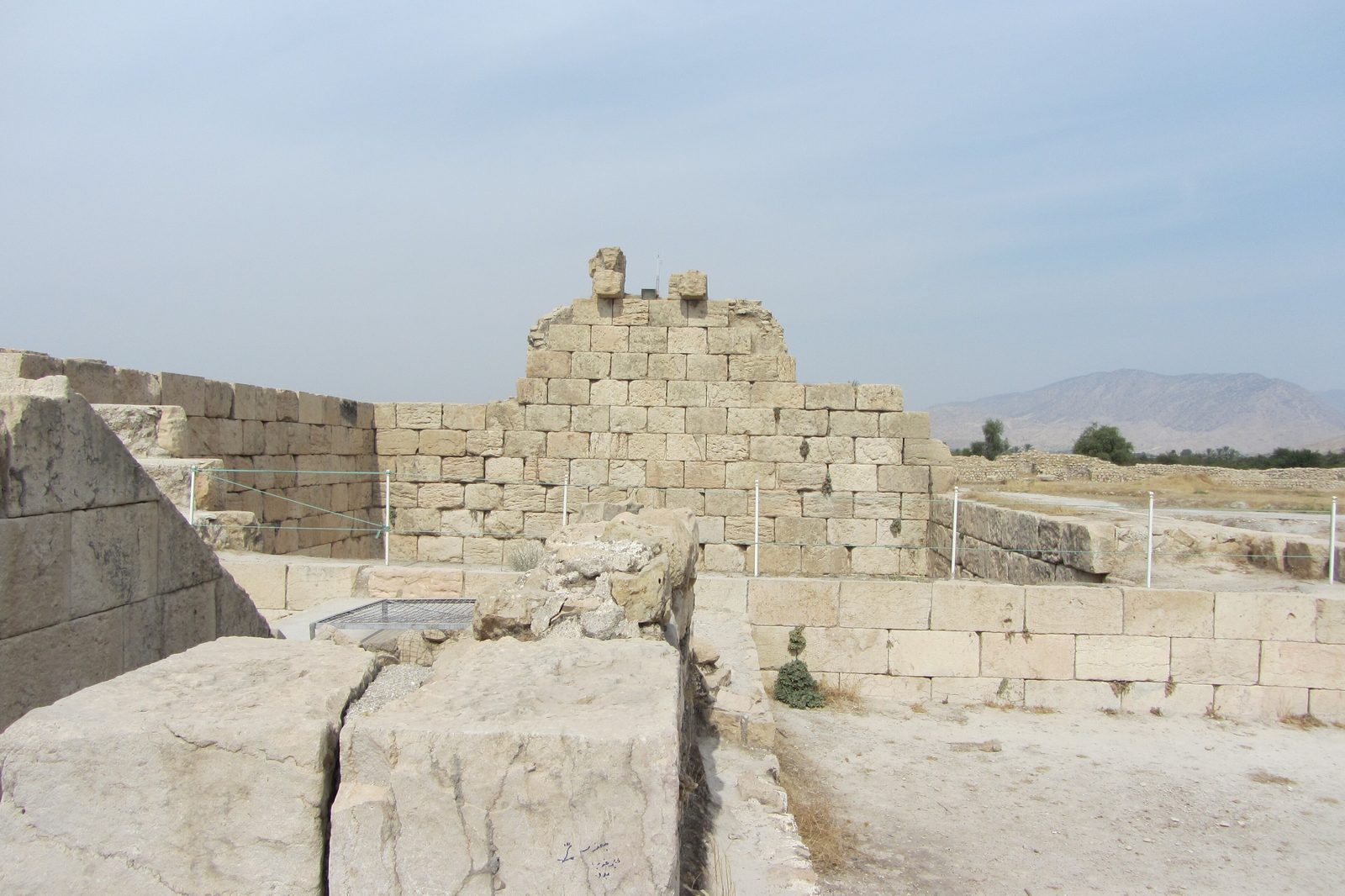
Bishapur is a ruined Sassanid royal city founded in 266 CE by Shapur I near present-day Kazerun in Fars, laid out on a Roman-influenced grid reportedly built with the labor of Roman prisoners captured after the defeat of Emperor Valerian. Its surviving monuments — the subterranean Temple of Anahita, the cruciform Ceremonial Hall, the mosaic-floored Eyvan, and the so-called Valerian Palace — sit beside the Tang-e Chogan gorge, where rock reliefs and a colossal statue of Shapur dramatize Sassanid power over Rome. Together with the nearby Shapur Cave, the city is part of the UNESCO-inscribed Sassanid Archaeological Landscape of Fars Region. Quieter than Persepolis and roughly two hours from Shiraz, it rewards travelers who want monumental Sassanid heritage without the crowds.
Next 5 days
Top places to see
- 1
Temple of Anahita
Subterranean water temple dedicated to the goddess Anahita. An almost square (~14m) chamber built several meters below ground so that channeled river water could flow silently around a processional walkway — a masterful Sassanid hydraulic and ritual space dedicated to the deity of waters, fertility and wisdom.
- Where
- Royal citadel, ancient city core
- Time needed
- 20-30 min
- Opening hours
- Open-air archaeological site, typically open daytime hours with an entry ticket; verify hours and price before travel.
- 2
Tang-e Chogan Reliefs
Gorge with six Sassanid rock reliefs along the Shapur River. Six monumental bas-reliefs carved into the gorge walls celebrate Sassanid kingship — among them Shapur I's triumph over Rome and the submission of Emperor Valerian, plus investiture and victory scenes of Bahram I, Bahram II and Shapur II. The name 'Chogan' references royal polo played here.
- Where
- Shapur River gorge, just north/east of the city
- Time needed
- 1-1.5 hr
- Opening hours
- Outdoor gorge; reliefs are roadside/riverside. Verify access conditions before travel, especially after rain when the river can rise.
- 3
Shapur Cave & Colossal Statue of Shapur I
Limestone cave holding a ~7m carved statue of Shapur I. A monumental ~7-meter statue of Shapur I carved from a single stalagmite stands in the mouth of a large limestone cave high in the Zagros, about 6 km from the city; it is one of the largest surviving statues of the ancient world and a separately inscribed UNESCO component.
- Where
- Mountain above Tang-e Chogan, ~6 km from Bishapur
- Time needed
- 2-3 hr (with hike)
- Opening hours
- Reached by a steep, strenuous mountain trail (roughly an hour's climb); not suitable in summer heat or for limited mobility. Verify trail conditions locally.
- 4
Ceremonial Hall (Cruciform Hall)
Cross-shaped Sassanid royal hall, once richly decorated. A large cruciform hall (Iranian cross plan) within the citadel, reported around 23m high and once lavishly stuccoed; one of the city's grandest interior spaces and a key example of Sassanid monumental architecture.
- Where
- Royal citadel
- Time needed
- 15-25 min
- Opening hours
- Within the main fenced site; verify hours and ticket before travel.
- 5
Eyvan-e Mosaic (Mosaic Portico)
Residence/portico famed for Roman-style floor mosaics. A grand iwan and courtyard whose floors carried figural mosaics in a Roman-influenced style (banqueters, dancers, musicians) — vivid evidence of Roman craftsmen at Bishapur; many panels are now in museums (notably the Louvre and the National Museum of Iran).
- Where
- Royal citadel
- Time needed
- 15-20 min
- Opening hours
- Original mosaics largely removed to museums; on-site you see the architectural setting. Verify what is displayed in situ before travel.
- 6
Valerian Palace
Palatial structure near the Anahita temple, of debated identity. A palace-like building close to the temple, popularly named for Emperor Valerian; its plan echoes the Anahita temple and it remains partly enigmatic to scholars, adding to the site's Roman-defeat narrative.
- Where
- Royal citadel
- Time needed
- 10-15 min
- Opening hours
- Attribution to Valerian is traditional, not firmly proven; structure is ruined. Verify site access before travel.
- 7
Commemorative Columns of Bishapur
Pair of tall votive/commemorative columns near the city. Two tall columns (one inscribed) set on the open ground commemorate the city's foundation under Shapur I and once likely supported royal statuary — a striking standing landmark of the ancient cityscape.
- Where
- Ancient city, near the citadel
- Time needed
- 10 min
- Opening hours
- Exact original height and configuration debated; verify on site.
- 8
City Walls, Grid Streets & Gates
Remains of the gridded fortified city and its four gates. Bishapur's Hippodamian grid (two intersecting main avenues, rectangular blocks) and fortification walls with four named gates (Hormoz, Mehr, Bahram, Shahr) make it one of the best examples of a planned Sassanid city; population is estimated in the tens of thousands.
- Where
- Across the wider ~190-hectare site
- Time needed
- 30-45 min walking
- Opening hours
- Largely foundations and wall lines; bring sun protection as there is little shade. Verify access before travel.
- 9
Bishapur Museum / Site Museum
Small museum displaying finds from the excavations. Holds artifacts recovered from Bishapur and the surrounding area, helping interpret the ruins (pottery, stucco, mosaic fragments and Sassanid objects).
- Where
- At/near the archaeological site
- Time needed
- 20-30 min
- Opening hours
- Existence/scope of an on-site museum varies; some finds are in Kazerun and national museums. Verify opening and location before travel.