
Qazvin
Alamut Valley
Eagle's-nest fortresses of the medieval Assassins, hidden in the high Alborz.
 8 highlights · tap a pin
Alamut is a remote highland valley on the southern flank of the Alborz mountains, northeast of Qazvin, where the Nizari Ismaili leader Hassan-i Sabbah seized Alamut Castle in 1090 CE and made it the capital of a semi-autonomous state known to Crusader-era Europe as the "Order of Assassins." For more than 160 years its mountain strongholds — Alamut and the larger Lambsar among scores of others — sheltered a famed library, gardens and centre of learning until the Mongols under Hulagu Khan dismantled them in 1256. Today the dramatic rock-perched ruins, alpine Ovan (Evan) Lake, terraced orchard villages and the old mule-paths over the range to the Caspian make Alamut one of Iran's most atmospheric trekking and heritage destinations.
Top places to see
- 1
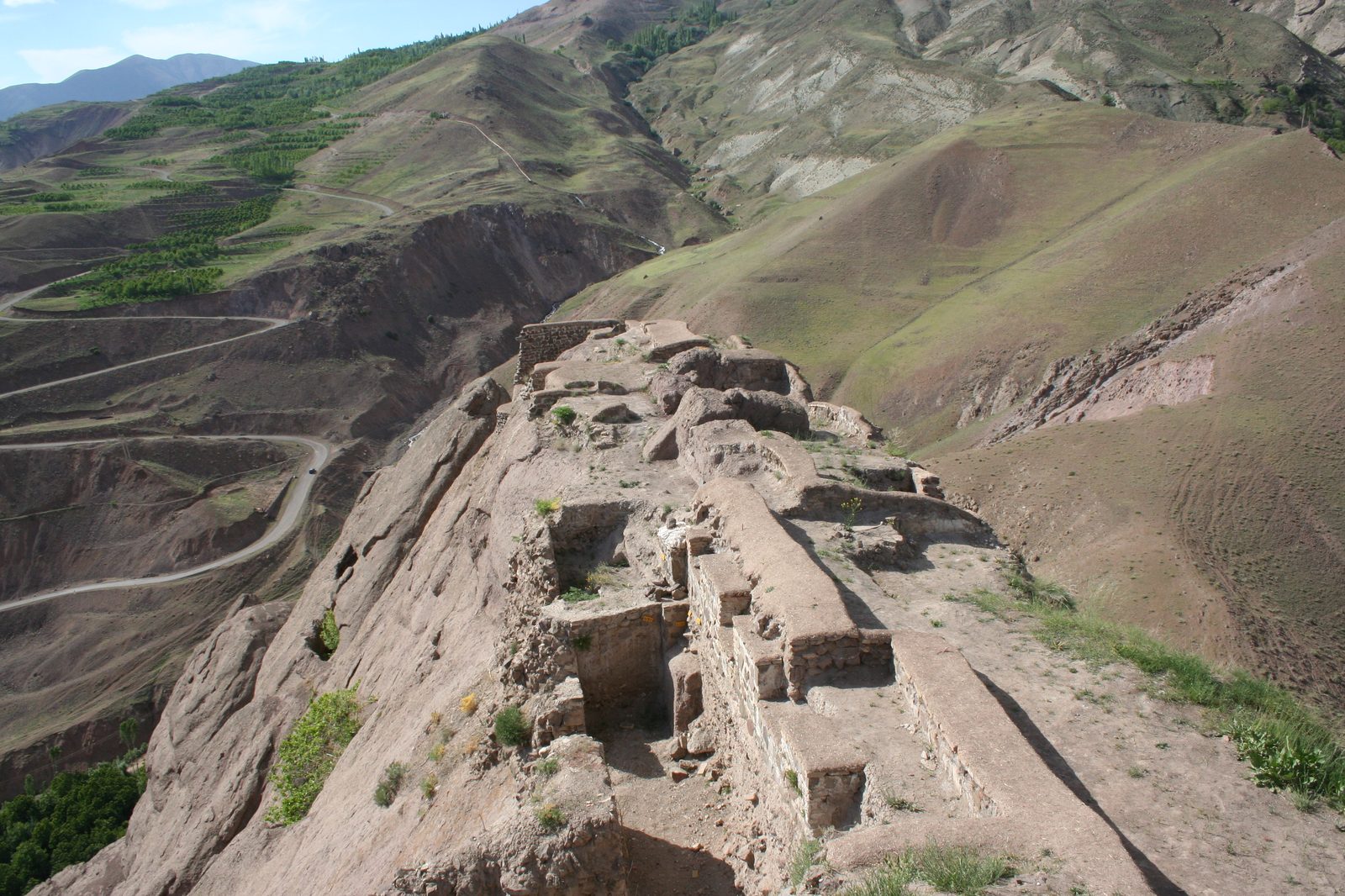
Alamut Castle (Qal'eh-ye Hasan / Castle of the Assassins)
Ruined Nizari Ismaili fortress on a sheer rock spur above Gazor Khan village, headquarters of Hassan-i Sabbah. The legendary seat of the 'Order of Assassins' (1090–1256), described by Marco Polo; centrepiece of the UNESCO Tentative List nomination. Climbable rock with sweeping valley views and surviving cisterns and wall fragments.
- Where
- Gazor Khan
- Time needed
- 2-3 hours (including the climb up to the rock)
- Opening hours
- Reached by a steep stepped path from Gazor Khan; entrance fee and hours change seasonally — verify before travel.
- 2
Lambsar (Lambesar) Castle
Largest and most heavily fortified of the Ismaili castles, sprawling over a long ridge near Razmian in West Alamut. Considered the second-most-important and the biggest Ismaili stronghold (ridge ~480 m long); famed for its sophisticated water-storage and defensive engineering. Part of the Alamut fortifications UNESCO nomination.
- Where
- Razmian (West Alamut)
- Time needed
- 2-3 hours
- Opening hours
- Remote; access via Razmian with a short uphill walk. Verify road condition and any entry fee before travel.
- 3
Ovan (Evan) Lake
Small spring-fed alpine lake at ~1,800 m, ringed by orchards and reed beds. Registered as a national natural heritage site; popular for boating, fishing and picnics in summer and a stop for migratory waterfowl in autumn. Fed only by springs and precipitation, with no inflowing rivers.
- Where
- Ovan / Evan
- Time needed
- 1-2 hours
- Opening hours
- Open-access lakeside; busy with domestic tourists on summer weekends. Verify boat-rental availability before travel.
- 4
Gazor Khan village
Traditional terraced orchard village at the foot of the Alamut Castle rock. The base for visiting Alamut Castle; stepped stone houses, walnut and fruit orchards, honey and local food, and the main cluster of valley guesthouses.
- Where
- East Alamut
- Time needed
- 1-2 hours
- Opening hours
- Verify guesthouse availability in advance, especially off-season.
- 5
Garmarud village (trek gateway)
Highland village at the eastern head of the valley, the classic start point for treks over the Alborz. Springboard for the famous Alamut-to-Caspian crossings (Garmarud to Yuj, and routes via the Salambar Pass) following old mule-paths down to the Mazandaran forests.
- Where
- East Alamut
- Time needed
- Half day to multi-day (trek start)
- Opening hours
- Treks here require a local guide and run mainly June–September; verify conditions and arrange logistics before travel.
- 6
Salambar Pass and Caravanserai
High Alborz pass (~3,200 m) with a historic stone caravanserai on the old route to the Caspian. The crux of the trans-Alborz trek; a centuries-old shelter on the mule-path that valley women once used to reach Tonekabon, with panoramic high-mountain scenery.
- Where
- Alborz crest (East Alamut)
- Time needed
- Trek waypoint (full day)
- Opening hours
- Snow-free and crossable only in summer; coordinates approximate — confirm route with a guide before travel.
- 7
Meymun Diz (Maymun-Dezh) fortress site
Cliff-side Ismaili stronghold, one of the last to fall to the Mongols. A dramatic conglomerate-cliff fortress associated with the final years of the Alamut state and the surrender of the last Imam; included among the region's Ismaili fortifications.
- Where
- Shams Kalayeh area (East Alamut)
- Time needed
- 1-2 hours
- Opening hours
- Ruined and remote; exact location uncertain — verify access and guide before travel.
- 8
Alamut Valley orchard villages (Zarabad, Hir, Dikin)
Cluster of stone-built farming villages with terraced orchards and ecolodge guesthouses. Showcase Alamut rural life — hazelnut, walnut and cherry orchards, beekeeping and home cooking; good bases for slow travel and shorter walks.
- Where
- East Alamut
- Time needed
- Half day
- Opening hours
- Coordinates approximate (village cluster); verify guesthouse openings before travel.
- 9
Alamut Valley trek (Assassins' castles)
Trek the valley of Hassan Sabbah's Assassins' castles, with an Alborz crossing to the Caspian forests. History + landscape: Assassins' castles plus a classic Alborz-to-Caspian traverse.
- Time needed
- 1–3 days