Fars
Naqsh-e Rostam
Wo Persiens Gottkönige im Felsen ruhen
 8 Highlights · tippen Sie auf einen Punkt
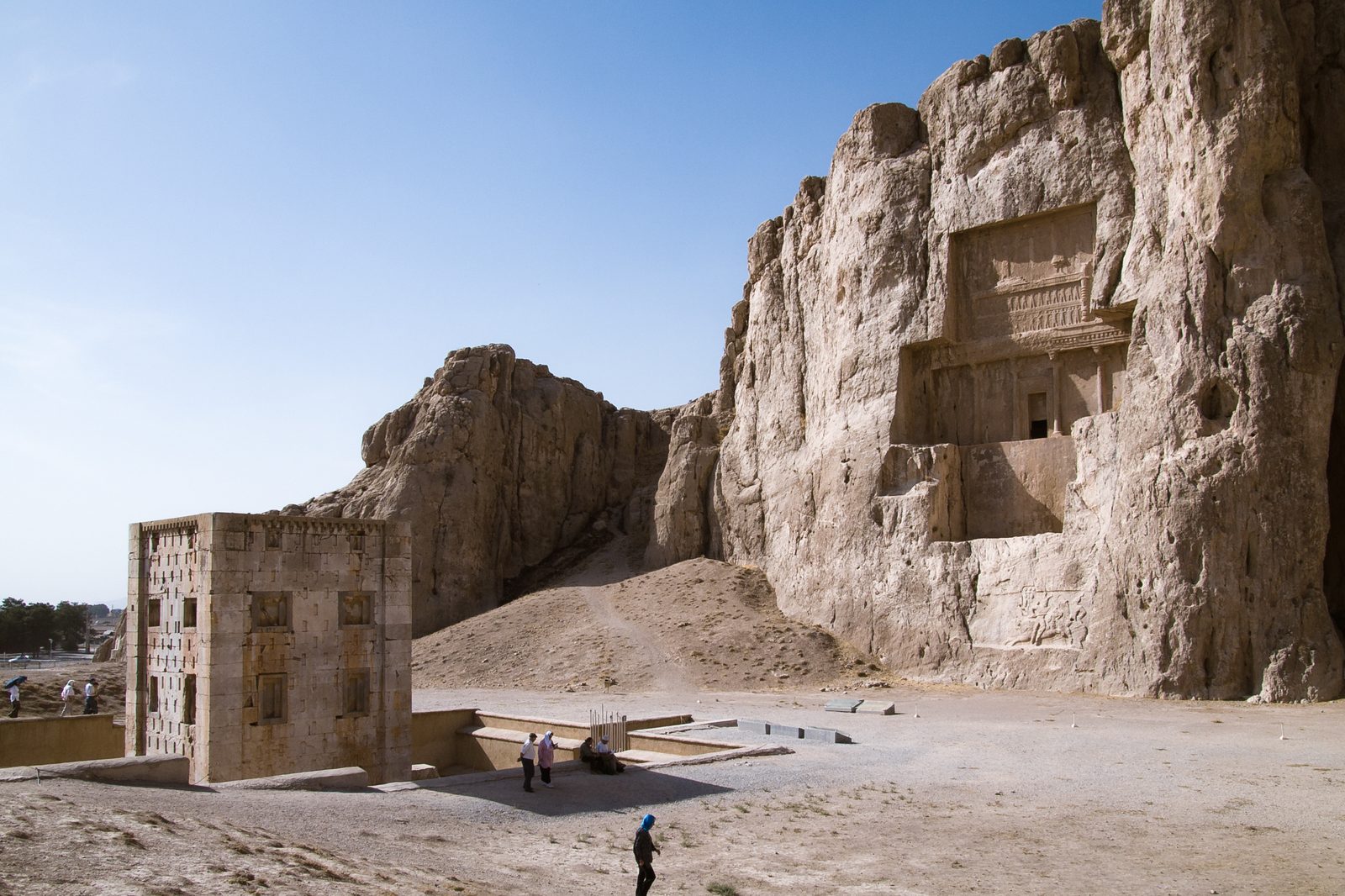
Naqsh-e Rostam ist eine monumentale, in den Fels geschlagene Nekropole in einer Felswand des Hosayn Kuh, etwa 12-13 km nordwestlich von Persepolis in der Provinz Fars. Vier kreuzförmige Gräber achämenidischer Großkönige, darunter Darius I., sind hoch in die Felswand gehauen, ihre Fassaden greifen die Audienzhallen von Persepolis auf. Darunter überschrieben sieben eindrucksvolle sasanidische Flachreliefs (3.-4. Jahrhundert n. Chr.) die achämenidische Größe bewusst und eigneten sie sich an – am berühmtesten der Triumph Shapurs I. über römische Kaiser. Mit dem rätselhaften Turm Würfel des Zoroaster und einer noch älteren elamischen Felsritzung umspannt die Stätte rund zwei Jahrtausende iranischen Königtums in einer einzigen Felswand.
Nächste 5 Tage
Top-Sehenswürdigkeiten
- 1
Tomb of Darius I (Darius the Great)
Cross-shaped rock-cut royal tomb, the only one confirmed by inscription. The only Naqsh-e Rostam tomb securely identified, via the trilingual DNa inscription where Darius lists his realms and proclaims his rule; the carved facade depicts the king on a throne-platform borne by 30 subject nations beneath the winged Faravahar.
- 2
Triumph of Shapur I over the Romans
The most famous Sassanid relief: a Persian king's victory over two Roman emperors. Depicts Shapur I on horseback with the captured emperor Valerian and the kneeling, suppliant Philip the Arab - the single most celebrated rock relief of the Sassanid era and a propaganda image of Persian dominance over Rome.
- 3
Investiture of Ardashir I
Founder of the Sassanid dynasty receiving kingship from the god Ohrmazd. Shows Ardashir I receiving the ring of sovereignty (diadem) from Ahura Mazda on horseback, with the defeated last Parthian king and the demon Ahriman trodden underfoot - a foundational legitimacy image of the Sassanid Empire.
- 4
Ka'ba-ye Zartosht (Cube of Zoroaster)
Achaemenid stone tower of white limestone on a stepped plinth, ~12.6 m tall. A square Achaemenid-era tower (5th century BC) of debated function - fire temple, royal tomb or archive; its walls bear key Sassanid inscriptions (the res gestae of Shapur I and the Zoroastrian priest Kartir). A sister tower stands at Pasargadae.
- 5
Tomb of Xerxes I
Cross-shaped royal tomb attributed to Xerxes the Great. One of the four cruciform Achaemenid tombs, attributed (unconfirmed by inscription) to Xerxes I, the king of the Greco-Persian Wars; restoration work has focused on this tomb in recent years.
- 6
Tombs of Artaxerxes I and Darius II
Two further cruciform Achaemenid royal tombs in the cliff. Complete the set of four near-identical rock-cut tombs; attributions to Artaxerxes I and Darius II are by scholarly consensus rather than inscription, showing the standardized Achaemenid royal funerary architecture.
- 7
Equestrian and Grandee reliefs of Bahram II
Cluster of Sassanid reliefs showing King Bahram II and mounted combat. Includes the 'Grandee' relief of Bahram II flanked by nobles and family, plus two equestrian jousting scenes against Roman and Indo-Sassanian foes - dynastic and martial imagery of the late 3rd century.
- 8
Investiture of Narseh
King Narseh receiving the ring of power from a female figure (likely Anahita). Shows Narseh taking the diadem from a female figure usually identified as the goddess Anahita - a rare investiture where a goddess, not Ohrmazd, confers kingship.
- 9
Equestrian relief of Hormizd II
Sassanid king unhorsing a fallen enemy. Depicts Hormizd II charging and forcing an enemy from the saddle, one of the later Sassanid additions completing the cliff's narrative of Persian martial supremacy.
- 10
Elamite relief (oldest carving)
Pre-Persian Elamite figure, c. 1000 BC, partly recut later. The most ancient carving at the site and the reason later kings deemed the cliff sacred; the partly weathered Elamite figure in distinctive headgear gives the site its mythic Persian name (linked to the hero Rostam).