
Yazd
Meybod
Eine Wüstenstadt aus Lehmziegeln, in der eine 2.000 Jahre alte Zitadelle auf Eishäuser, Taubentürme und den Webstuhl des Zilu trifft
 8 Highlights · tippen Sie auf einen Punkt
Meybod ist eine der ältesten durchgehend bewohnten Wüstenstädte Zentralirans, eine vielschichtige Landschaft aus luftgetrockneten Lehmziegeln, die in der Provinz Yazd entlang der Seidenstraße wuchs. Überragt von der mehrstöckigen Burg Narin (Naryn) und umgeben von einer safawidischen Karawanserei mit vier Iwanen, einem gewölbten Eishaus aus der Qajar-Zeit, einem zylindrischen Taubenturm und einem Museum in der alten Poststation, bewahrt sie ein nahezu vollständiges Bild vormodernen Wüstenlebens und seiner Wasserbaukunst. Die Stadt ist zudem die historische Heimat des Zilu, eines beidseitig verwendbaren, flach gewebten Bodenbelags aus Baumwolle, und wird als „Weltstadt des Zilu“ gefeiert. Ihr kompakter, gut zu Fuß erkundbarer Altstadtkern macht sie zu einem beliebten Halbtagesausflug von Yazd aus.
Nächste 5 Tage
Top-Sehenswürdigkeiten
- 1
Narin (Naryn) Castle
Towering multi-storey mud-adobe citadel on a hill, one of Iran's oldest fortresses. A stratified mud-brick fortress with fabric dated to the Median, Achaemenid and Sasanian eras (commonly cited as roughly 2,000 years old, some claims up to several millennia). Built in successive stages with three main levels, helical stairwells, an underground chamber, terraces and an early sarooj-mortar plumbing system; often described as among the largest adobe fortresses in Iran after Bam.
- Wo
- Old city, atop a 25 m hill
- Zeitbedarf
- 1-1.5 hours
- Öffnungszeiten
- Verify opening hours and ticket price before travel; sections may be under restoration/structurally limited.
- 2
Shah Abbasi (Abbasi) Caravanserai
UNESCO 2023Complete Safavid four-iwan brick caravanserai, now home to the Zilu Museum. One of the most intact Safavid four-iwan caravanserais in Iran, traditionally attributed to the reign of Shah Abbas II (late 17th c.), with a central courtyard, around 100 inner and outer chambers, iwans, stables and storerooms. It is part of the UNESCO-inscribed 'Persian Caravanserai' serial site (2023) and houses the Zilu Museum.
- Wo
- Old city historic complex
- Zeitbedarf
- 45-60 minutes
- Öffnungszeiten
- Verify opening hours and ticket price before travel.
- 3
Meybod Ice House (Yakhchal)
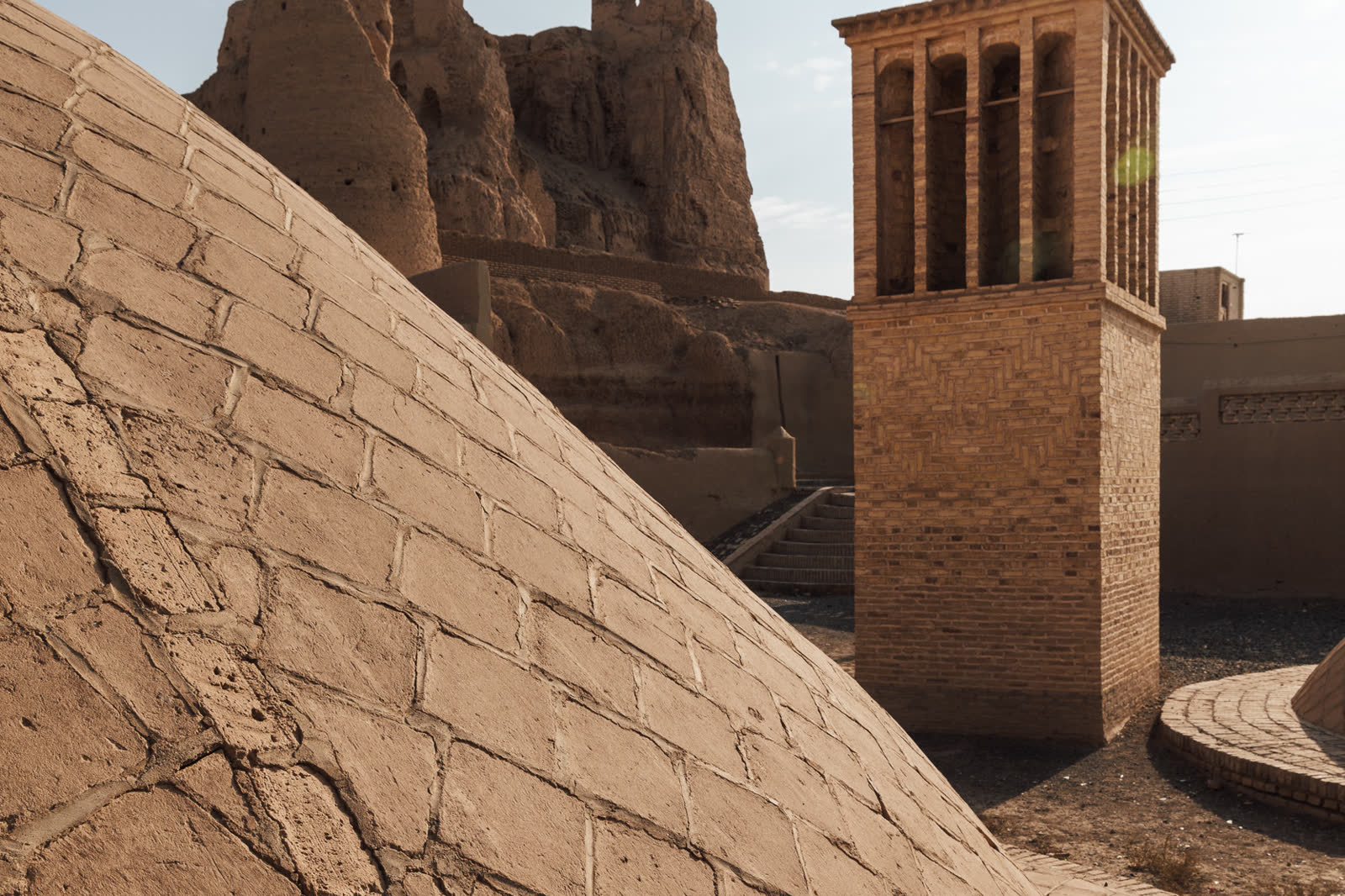
Conical domed Qajar-era ice house used to store winter ice through the desert summer. A grand mud-brick yakhchal with a tall ventilating dome and underground pit; winter ice was made/stored and preserved for use in the scorching summer, a striking example of pre-refrigeration desert engineering. Stands opposite the caravanserai.
- Wo
- Old city historic complex
- Zeitbedarf
- 20-30 minutes
- Öffnungszeiten
- Verify access/opening hours before travel.
- 4
Pigeon Tower (Kabutar Khaneh / Dovecote)
Cylindrical Qajar-era tower built to house thousands of pigeons for fertilizer. A roughly 8 m cylindrical tower with three floors and thousands of nest holes, designed to attract pigeons whose droppings were collected as potent fertilizer. Clever details include entry holes sized to keep out larger birds and smooth plaster to stop snakes climbing in.
- Wo
- Old city
- Zeitbedarf
- 20 minutes
- Öffnungszeiten
- Verify access/opening hours before travel.
- 5
Zilu Museum
Museum of Meybod's traditional zilu flat-weaving, inside the Shah Abbasi caravanserai. Dedicated to zilu, the reversible cotton flat-woven floor covering for which Meybod is famous (registered as the 'world city of zilu'). Walks visitors through the whole process from cotton sorting and natural dyeing to weaving; the oldest surviving zilu, said to be roughly 800 years old, is kept here.
- Wo
- Inside Shah Abbasi Caravanserai
- Zeitbedarf
- 30-45 minutes
- Öffnungszeiten
- Verify opening hours and ticket price before travel; shares the caravanserai site.
- 6
Chaparkhaneh (Post House / Post Museum)
Restored Qajar postal relay station, now a small post museum. A historic chaparkhaneh that once served as a mail and courier relay station on the trade roads; now operates as the Post Museum of Meybod with exhibits recreating how the station worked.
- Wo
- Old city historic complex
- Zeitbedarf
- 20-30 minutes
- Öffnungszeiten
- Verify opening hours before travel.
- 7
Kolar Ab Anbar (Water Reservoir)
Domed traditional water cistern with windcatchers, built in the late 17th century. A traditional desert ab anbar (water reservoir) reportedly built in 1691, with a dome and four windcatchers (badgirs) that ventilated and cooled the stored qanat water. Located opposite the caravanserai, it illustrates Meybod's desert water-management ingenuity.
- Wo
- Old city historic complex
- Zeitbedarf
- 15-20 minutes
- Öffnungszeiten
- Verify access before travel.
- 8
Old City of Meybod (historic adobe quarter)
Maze of sun-dried mud-brick alleys, houses and qanat infrastructure around the citadel. The surrounding historic adobe fabric ties the monuments together and is on Iran's UNESCO tentative list (submitted 2007) as 'The Historical City of Maybod,' preserving traditional desert urbanism, courtyards and qanat-fed water systems.
- Wo
- Old city
- Zeitbedarf
- 1 hour walking
- Öffnungszeiten
- Open public area; best explored on foot in cooler hours.
Unterkünfte in Meybod
Ab $5 pro Nacht, unser Service inbegriffen