
Kerman
Mahan
Eine Wüstenoase aus Paradiesgärten und die türkisfarbene Kuppel eines Mystikers
 6 Highlights · tippen Sie auf einen Punkt
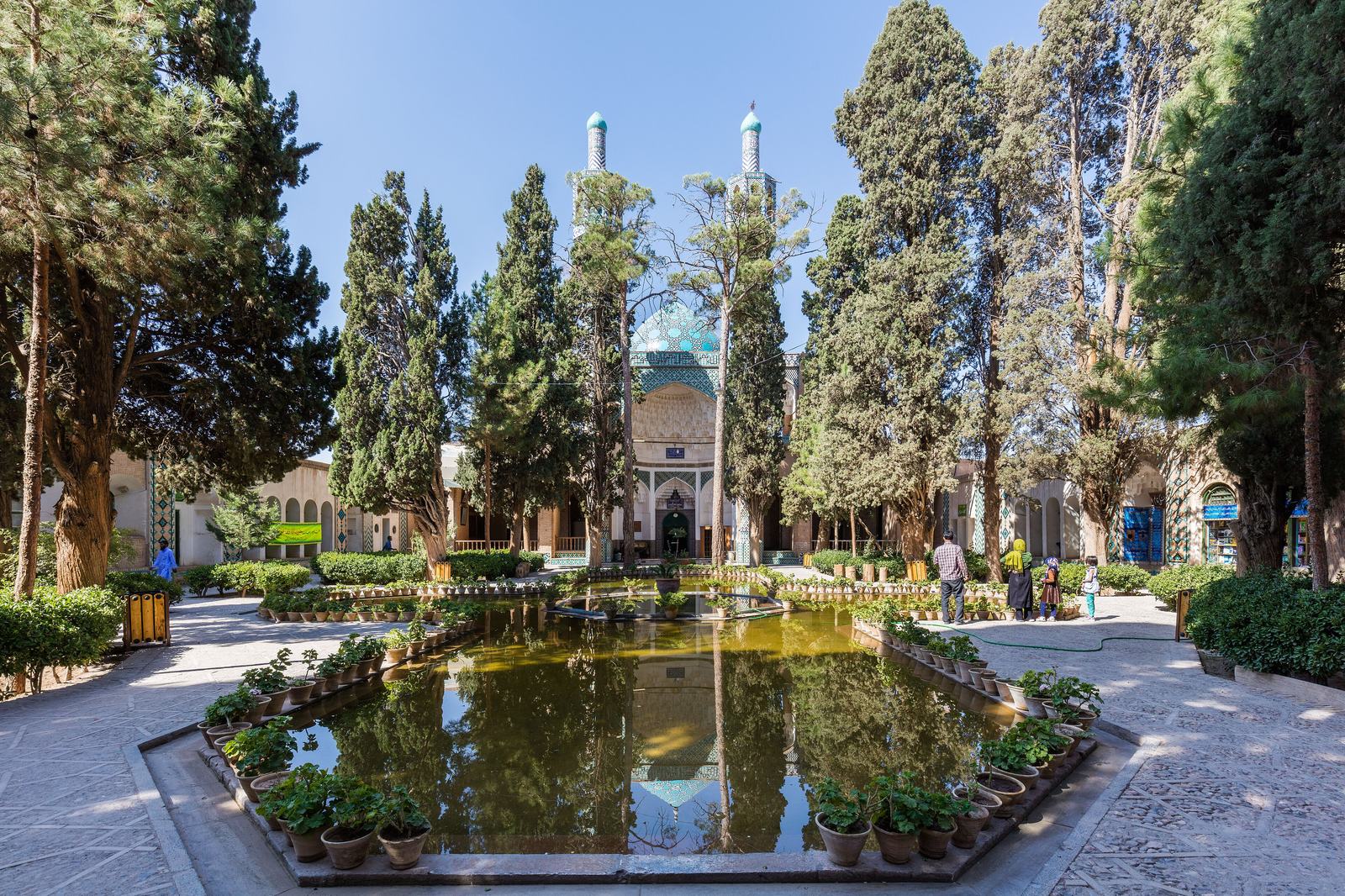
Mahan ist eine kleine Hochlandstadt rund 35 km südöstlich der Stadt Kerman, auf knapp 1.900 m am Rand der Wüste gelegen und berühmt für zwei der eindrucksvollsten Baudenkmäler Irans. Der von der UNESCO gelistete Shazdeh-Garten (Prinzengarten) ist ein terrassierter Paradiesgarten aus der Qajar-Zeit, der einen Wüstenhang hinabfließt; seine gestuften Wasserläufe werden von einem Qanat und Bergquellen gespeist – ein trotziger Kontrast zur umgebenden Trockenheit. In der Stadt selbst liegt der Schrein von Shah Nematollah Vali, des Sufi-Meisters und Dichters des 14. und 15. Jahrhunderts, dessen Grabanlage mit ihrer berühmten türkisfarbenen Kuppel und den beiden Minaretten seit fast sechs Jahrhunderten Pilger anzieht. Zusammen machen sie Mahan zu einem kompakten, aber außergewöhnlichen Halt, der die Kunst des persischen Gartens mit gelebtem Sufi-Erbe verbindet.
Nächste 5 Tage
Top-Sehenswürdigkeiten
- 1
Shazdeh Garden (Bagh-e Shazdeh / Prince's Garden)
UNESCO 2011Terraced Qajar paradise-garden cascading down a desert slope, a UNESCO Persian Garden. One of nine gardens inscribed as 'The Persian Garden' (UNESCO 2011, component 1372-006). A 5.5-hectare walled rectangle (about 407 m by 122 m) with tiered water channels and fountains running between a lower entrance gate and an upper two-storey pavilion, fed by qanat/springs in stark contrast to the surrounding aridity.
- Wo
- About 6 km southeast of Mahan town
- Zeitbedarf
- 1.5-2.5 hours
- Öffnungszeiten
- Open daily; entrance fee for foreign visitors. Hours and fees change seasonally - verify before travel.
- 2
Shrine of Shah Nematollah Vali (Aramgah-e Shah Nematollah Vali)
Sufi master's tomb complex with a famed turquoise dome and twin minarets. Mausoleum of the founder of the Nimatullahi Sufi order, begun c.1436, with a turquoise/blue girih-tiled dome rebuilt under Shah Abbas I (c.1601) and twin turquoise minarets from the Qajar era. The complex includes four courtyards (Atabaki, Vakil-ol-Molki, Mirdamad, Hosseiniyeh), porticos, a reflecting pool and a mosque.
- Wo
- Mahan town center
- Zeitbedarf
- 1-1.5 hours
- Öffnungszeiten
- Active pilgrimage site; modest dress required, women need a chador (often loaned at entrance). Verify visiting hours and prayer-time restrictions before travel.
- 3
Atabaki Courtyard and twin minarets (within the shrine)
The grand tiled forecourt and turquoise minaret pair framing the dome. The Qajar-era Atabaki courtyard with its two tall turquoise-tiled minarets provides the iconic photographic view of the shrine, the minarets and blue dome rising above the plain stone-coloured complex.
- Wo
- Inside the shrine complex, Mahan
- Zeitbedarf
- 20-30 minutes
- Öffnungszeiten
- Part of the shrine visit; same dress and timing rules apply. Verify access.
- 4
Shazdeh Garden upper pavilion (Kolah Farangi / mansion)
UNESCO 2011Two-storey Qajar residential pavilion crowning the garden's top terrace. The ornamented two-floor building at the upper end of Shazdeh Garden anchors the central water axis and houses period interiors; it is the architectural focal point of the cascading layout and a key restoration subject.
- Wo
- Top terrace of Shazdeh Garden, ~6 km from Mahan
- Zeitbedarf
- 20-30 minutes
- Öffnungszeiten
- Interior access can vary with ongoing conservation; verify before travel.
- 5
Rayen Castle (Arg-e Rayen)
Vast medieval adobe citadel, a smaller cousin of Bam, on the way south of Mahan. One of the best-preserved mudbrick castles in Iran, inhabited until roughly 150 years ago and believed to be at least 1,000 years old with possible Sassanid-era foundations. A popular add-on excursion from Mahan toward the desert.
- Wo
- Rayen, about 60 km southeast of Mahan
- Zeitbedarf
- 1.5-2 hours
- Öffnungszeiten
- Separate site outside Mahan; check opening hours and fees before travel.
- 6
Bam Citadel (Arg-e Bam)
UNESCO 2004Enormous ancient adobe citadel and UNESCO site, a longer day-trip from Mahan. Among the largest adobe structures in the world, dating to the Sassanid era; the cultural landscape of Bam and its surroundings is itself UNESCO-inscribed (2004). Often combined with Mahan and Rayen on a Kerman desert day tour.
- Wo
- Bam, about 120 km southeast of Mahan
- Zeitbedarf
- 2-3 hours
- Öffnungszeiten
- Far from Mahan (best as a full-day combined tour); verify hours and current restoration access before travel.
Unterkünfte in Mahan
Ab $7 pro Nacht, unser Service inbegriffen