
Yazd
Kharanaq
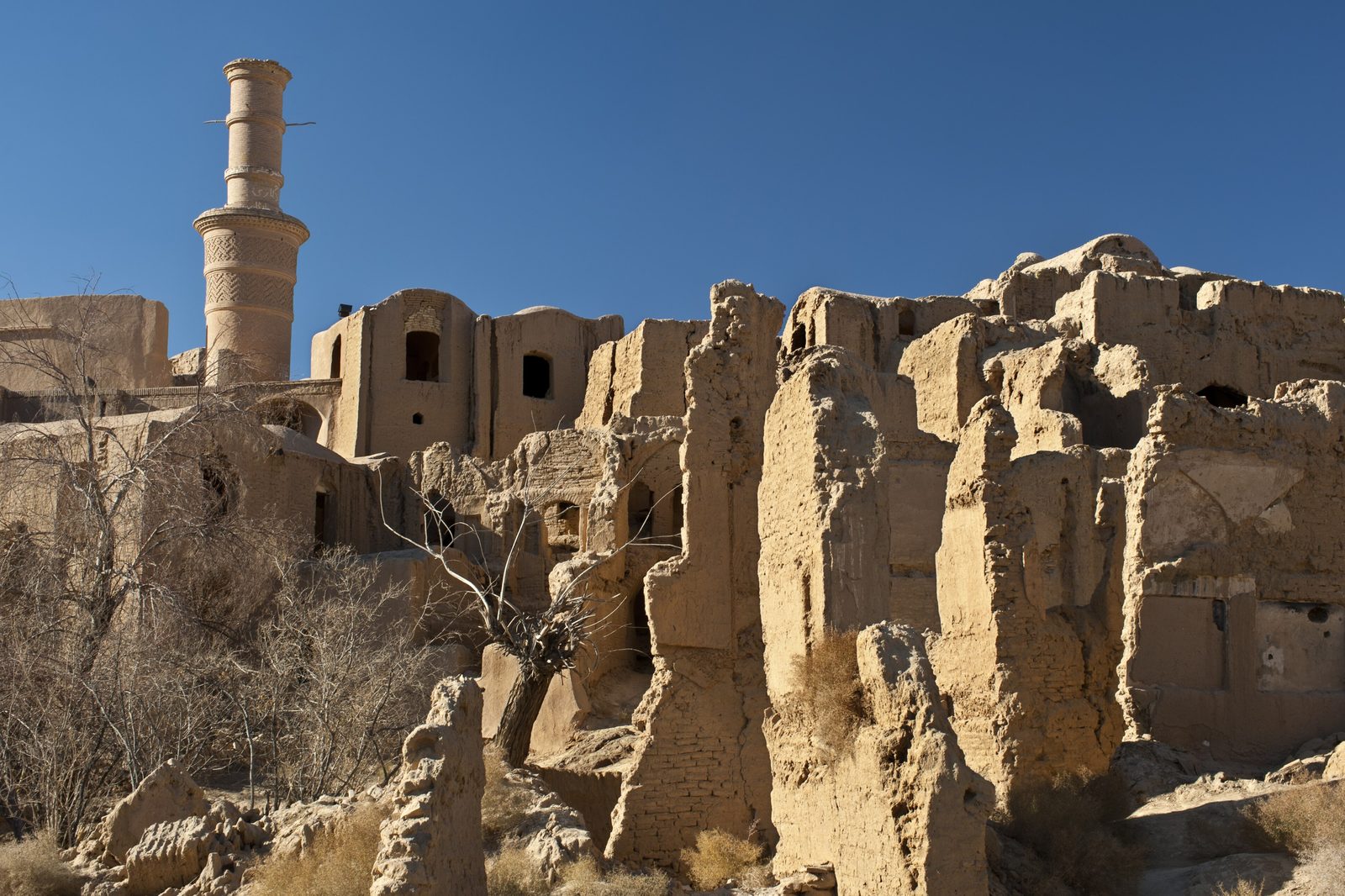
Eine zerfallende Lehmziegel-Geisterstadt, gekrönt von einem Minarett, das bei einer Berührung schwankt
 8 Highlights · tippen Sie auf einen Punkt
Kharanaq ist ein nahezu verlassenes Lehmdorf in einem abgelegenen Tal rund 70 km nördlich von Yazd, im Landkreis Ardakan, dessen Besiedlung etwa 4.000 bis 4.500 Jahre zurückreicht. Die labyrinthische Altstadt aus übereinandergestapelten Häusern aus sonnengetrockneten Lehmziegeln, aus Tunneln und Durchgängen war bis vor wenigen Jahrzehnten durchgehend bewohnt, bis versiegendes Wasser die Bewohner in eine benachbarte Neustadt zwang. Das Wahrzeichen des Ortes ist sein Schwankendes Minarett, ein vollständig aus Lehm errichteter Turm, der sichtbar vibriert, wenn man ihn anstößt; hinzu kommen eine restaurierte Karawanserei, eine kleine Moschee und eine lange Aquäduktbrücke. Heute gilt Kharanaq als eine der größten und stimmungsvollsten Ansammlungen von Lehmarchitektur in Iran.
Nächste 5 Tage
Top-Sehenswürdigkeiten
- 1
Shaking Minaret (Oscillating Minaret of Kharanaq)
A 15 m all-clay minaret with three floors and a spiral interior stair that visibly trembles when nudged. Reputedly the only minaret in the world built entirely of clay that shakes; one of Iran's handful of 'moving minarets,' with the cause of its oscillation still debated.
- Wo
- Old Town, beside the Jameh/Qajar mosque
- Zeitbedarf
- 20-30 min
- Öffnungszeiten
- Climbing access and shaking demonstrations vary; verify before travel
- 2
Old Town (abandoned adobe quarter)
A maze of stacked mud-brick houses, tunnels, covered passageways and collapsing rooms spread over a hillside. One of the largest and most photogenic collections of crumbling earthen architecture in Iran, continuously inhabited until roughly 40 years ago.
- Wo
- Old Kharanaq
- Zeitbedarf
- 1-2 hours
- Öffnungszeiten
- Some structures are unstable; tread carefully and verify safe areas before travel
- 3
Kharanaq Caravanserai
A restored caravanserai near the village entrance that once sheltered merchants and pilgrims. Historic Silk-route waystation, rebuilt in the Qajar era and now restored; partly used for hospitality/lodging.
- Wo
- Village entrance
- Zeitbedarf
- 30 min
- Öffnungszeiten
- Lodging/cafe operation status varies; verify before travel
- 4
Jameh Mosque of Kharanaq (Qajar mosque / hoseyniyeh)
A small restored mud-brick mosque with a shabestan prayer hall, standing at the foot of the shaking minaret. The functioning religious heart of the old village and the structure the famous minaret is attached to.
- Wo
- Old Town
- Zeitbedarf
- 15-20 min
- Öffnungszeiten
- Modest dress required; verify access before travel
- 5
Aqueduct Bridge
A long (~40 m) historic bridge built to carry water for irrigation across the valley. A striking piece of desert hydraulic engineering tied to the qanat system that once sustained the village.
- Wo
- Edge of Old Town
- Zeitbedarf
- 10-15 min
- 6
Kharanaq Castle / fortress
A fortified complex of multi-storey adobe houses said to date to the Sasanian era. Among the oldest fabric in the village (reputedly ~1,800 years old); recently the subject of restoration work.
- Wo
- Old Town core
- Zeitbedarf
- 30-45 min
- Öffnungszeiten
- Restoration ongoing in parts; verify open areas before travel
- 7
Qajar bathhouse (hammam) with qanat system
An old public bath featuring the village's qanat-fed water plumbing. Illustrates how the settlement harnessed underground water in a waterless landscape.
- Wo
- Old Town
- Zeitbedarf
- 15 min
- 8
Old water mills
Two historic mills, reported to be over a century old, powered by the village's water channels. Rare surviving examples of qanat-powered milling in the central desert.
- Wo
- Near the watercourse
- Zeitbedarf
- 10-15 min