
Fars
Firuzabad
Geburtsort des Sassanidenreichs, rund um die erste vollkommen kreisrunde Stadt der Welt
 8 Highlights · tippen Sie auf einen Punkt
Firuzabad, eine Stadt in der südlichen Ebene von Fars, etwa 120 km südlich von Shiraz, ist die Wiege des Sassanidenreichs. Hier errichtete Ardashir I., der Begründer der Dynastie, im frühen 3. Jahrhundert seine Hauptstadt Ardashir-Khurreh (das antike Gor) als minutiös geplante Kreisstadt, dazu seine Felsenfestung Qal'eh Dokhtar und seinen Zeremonialpalast, den Palast des Ardashir, mit seinen wegweisenden Kuppeln auf Trompen. Zusammen mit den Felsreliefs in der eindrucksvollen Tang-ab-Schlucht bilden diese Monumente die Gruppe von Firuzabad innerhalb der UNESCO-Welterbestätte „Sassanidische archäologische Landschaft der Region Fars“ und markieren den architektonischen Übergang vom parthischen zum sassanidischen Persien. Die umliegende Ebene ist zudem Winterweide der Qashqai-Nomaden und legt über die tiefe Antike eine lebendige kulturelle Schicht.
Nächste 5 Tage
Top-Sehenswürdigkeiten
- 1
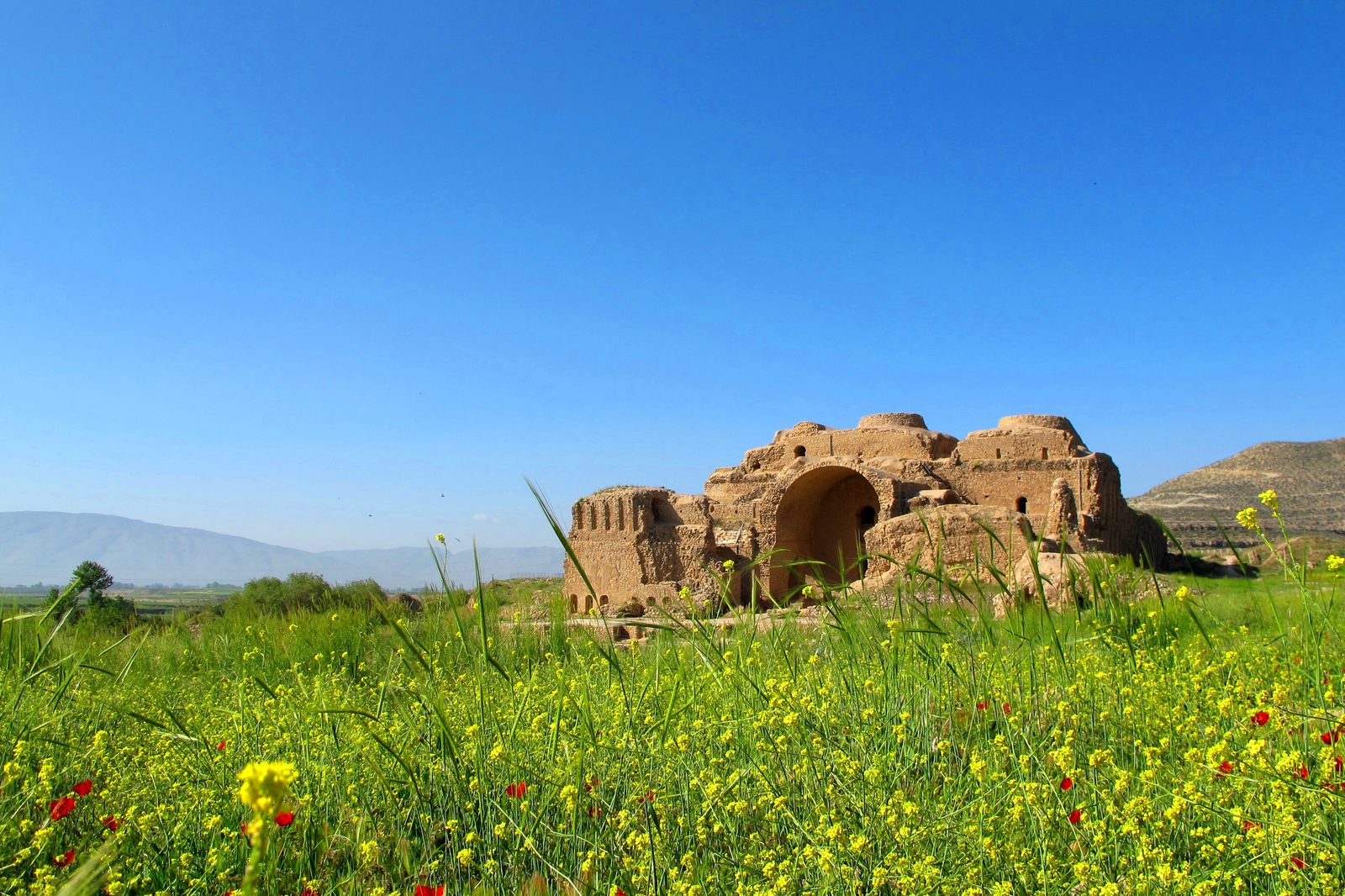
Palace of Ardashir (Atashkadeh)
UNESCO 2018Ardashir I's grand ceremonial palace beside a spring-fed pool, famous for its domes on squinches. Built c. 224 CE, it is one of the earliest surviving examples of domes raised on squinches over a square chamber and three large iwans—an engineering leap that influenced later Persian and Islamic dome architecture. Designed to display royal majesty rather than for defense, set beside a sacred spring possibly linked to the goddess Anahita.
- Wo
- ~2 km north of ancient Gor, Tang-ab area
- Zeitbedarf
- 1–1.5 hours
- Öffnungszeiten
- Verify opening hours and ticket price before travel; bring water, little shade on site.
- 2
Qal'eh Dokhtar (Maiden Castle)
UNESCO 2018Ardashir's earlier cliff-top fortress-palace commanding the Tang-ab gorge. Built c. 209–224 CE on a rocky bluff above the river and road, it combines defense with palatial design—an arched vault, a domed hall on squinches, and a spiral staircase. It marks an early step in Sassanid dome construction and offers sweeping views over the gorge and plain. Structurally fragile and slowly eroding.
- Wo
- Tang-ab gorge, beside the Firuzabad–Kavar road
- Zeitbedarf
- 1–1.5 hours
- Öffnungszeiten
- Steep, uneven climb; wear good footwear. Verify access and any closure for conservation before travel.
- 3
Ardashir-Khurreh / City of Gor (circular city)
UNESCO 2018Ruins of the world's first known perfectly circular planned city, ~2 km in diameter. Ardashir I's capital was laid out as a near-perfect circle (~1,950 m diameter) divided into 20 radial sectors by a precise geometric grid, ringed by a moat and wall. The radial plan is best appreciated from height or aerial imagery and is a landmark in the history of urban planning.
- Wo
- NW of modern Firuzabad
- Zeitbedarf
- 1–2 hours (combine with the central tower)
- Öffnungszeiten
- An open archaeological plain rather than a ticketed building; circle plan is clearest from elevated viewpoints. Verify any guided-access requirements.
- 4
Minar / Terbal (central tower of Gor)
UNESCO 2018Tall stone spiral tower at the exact center of the circular city. A roughly 9 m square stone pier rising over 30 m, built by Ardashir I as the symbolic and geometric heart of his circular capital—variously interpreted as a spiral fire/observation tower marking the city's axis. One of the most enigmatic Sassanid structures.
- Wo
- Center of Ardashir-Khurreh / Gor
- Zeitbedarf
- 30–45 minutes
- Öffnungszeiten
- Open ruin on the plain; no facilities. Verify access route before travel.
- 5
Victory Relief of Ardashir I (Tang-ab)
UNESCO 2018Monumental rock relief of Ardashir's cavalry victory over the last Parthian king. Carved on a vertical cliff on the bank of the river in the Tang-ab gorge, this equestrian battle scene commemorates Ardashir's 224 CE defeat of Artabanus and is often cited as the largest surviving Iranian rock relief (about 18 m long). Foundational Sassanid royal propaganda imagery.
- Wo
- Tang-ab gorge, near Qal'eh Dokhtar
- Zeitbedarf
- 30–45 minutes
- Öffnungszeiten
- Roadside/riverside relief; verify exact pull-off and footpath before travel. Best light in morning.
- 6
Investiture Relief of Ardashir I (Tang-ab)
UNESCO 2018Rock relief showing the god Ahura Mazda handing Ardashir the ring of kingship. Depicts Ohrmazd (Ahura Mazda) investing Ardashir with the diadem/ring of sovereignty, with the defeated foes trampled underfoot—a defining image of Sassanid divine-right kingship and one of five reliefs Ardashir commissioned during his reign.
- Wo
- Tang-ab gorge, walking distance from Qal'eh Dokhtar
- Zeitbedarf
- 30 minutes
- Öffnungszeiten
- Open-air relief on the gorge wall; verify path and parking before travel.
- 7
Tang-ab gorge & Sassanid bridge ruins
Scenic river gorge linking the monuments, with remains of a defensive wall and ancient bridge. The dramatic gorge north of Qal'eh Dokhtar was the strategic gateway to the circular capital; it holds the two royal reliefs, a blocking defensive wall, and the ruins of a Sassanid bridge. The water, cliffs, and ruins make it the natural-and-historical spine of any Firuzabad visit.
- Wo
- Between modern Firuzabad and the monuments
- Zeitbedarf
- 1 hour (combine with reliefs/castle)
- Öffnungszeiten
- Open landscape; conditions vary with season and river flow. Verify road conditions before travel.
- 8
Qashqai nomad encampments (seasonal)
Winter pastures of the Qashqai tribal confederacy on the Firuzabad plain. Firuzabad and the surrounding Fars plains are traditional winter grazing grounds of the Qashqai, a Turkic-speaking nomadic confederacy renowned for gabbeh/kilim weaving, music, and pastoral life. In the cooler months visitors can arrange to meet families, see weaving and bread-making, and witness a living continuity with the region's deep past.
- Wo
- Surrounding Firuzabad plain (seasonal, roughly Oct–Apr)
- Zeitbedarf
- Half to full day with a guide
- Öffnungszeiten
- Seasonal and location-dependent; arrange respectfully through a local guide/operator. Verify timing of the migration before travel.